
You can save hundreds of dollars this holiday season simply by avoiding retail smoke and mirrors. Most heavily promoted doorbusters are designed to exploit impulse buying rather than deliver genuine value.
Retailers routinely inflate regular price tags weeks ahead of November to manufacture illusions of steep markdowns. Recognizing these deceptive promotions keeps your hard-earned retirement dollars and household budget secure.
This guide reveals the ten holiday promotions that rarely deliver authentic savings, backed by real retail pricing data. You will discover exactly when to buy each item instead for maximum value.
What You’ll Learn and Why It Matters
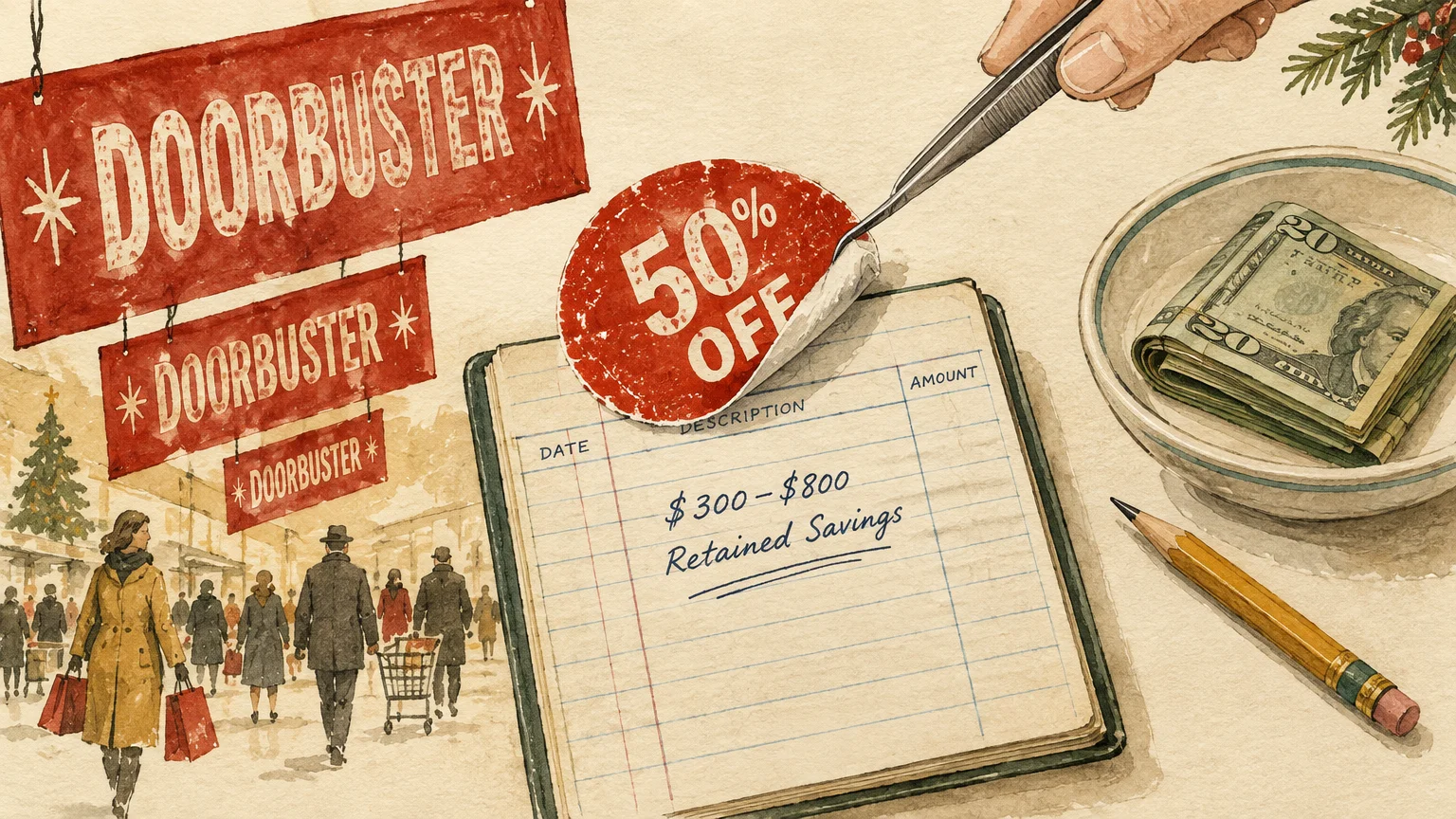
This guide helps budget-conscious households and retirees avoid deceptive holiday marketing and retain an estimated $300–$800 in unspent cash. You will learn how to identify fake discounts, verify genuine price histories, and schedule purchases strategically.
We will examine ten product categories where holiday markdowns are statistically illusory. You will also master a repeatable verification checklist to protect your savings on every future purchase.
Costs, Time, and Tradeoffs in Plain English
True bargain hunting requires an investment of 15–30 minutes of price tracking rather than reckless holiday spending. Your primary upfront cost is simply patience; the financial risk comes from buying artificially inflated merchandise.
Retailers often advertise a loss leader—a promotional item sold below cost or normal margin to lure foot traffic—to encourage high-margin impulse purchases. The hidden tradeoff comes from buying stripped-down derivative products that fail prematurely.
You must also monitor the unit price—the cost per single ounce, pound, or functional metric—rather than trusting bulk promotional bundles. Promotional packaging frequently disguises smaller product quantities behind flashy discount stickers.
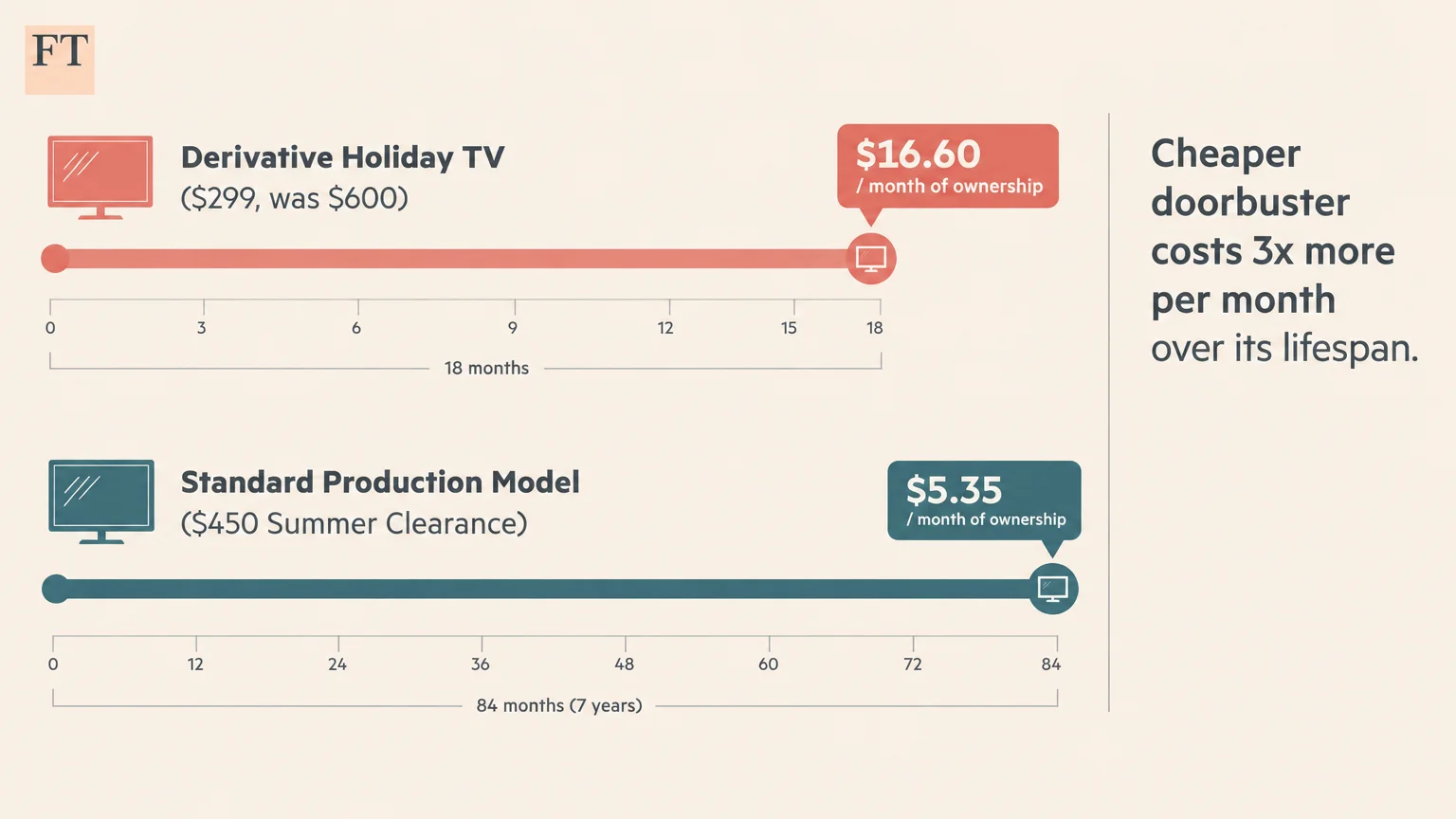
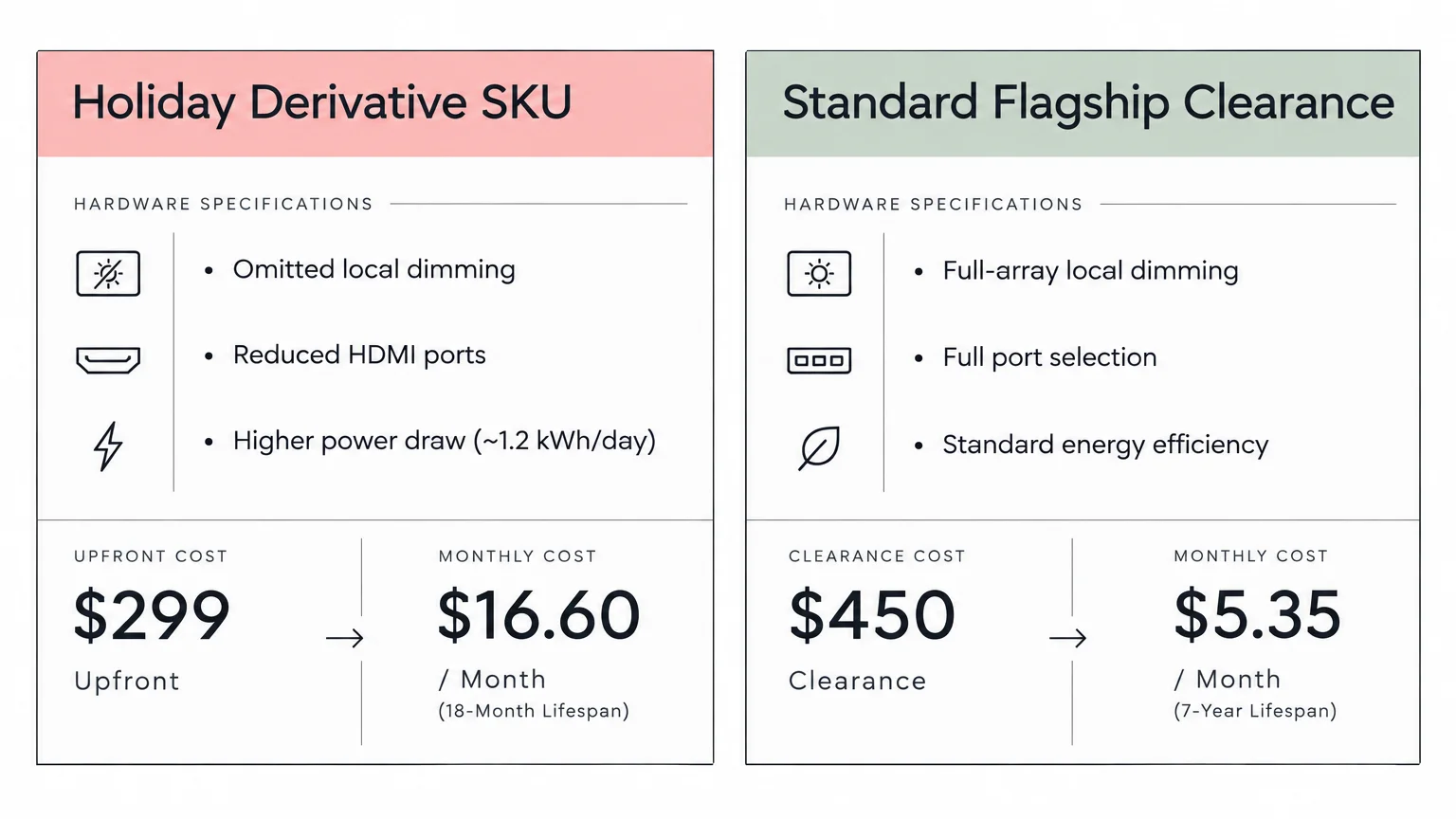
Consider a back-of-the-envelope calculation on a standard $600 television advertised for $299 on Black Friday. If that derivative television fails after 18 months, your cost comes to approximately $16.60 per month of ownership.
Conversely, a standard production model purchased for $450 during a summer clearance that lasts seven years costs only $5.35 per month. The cheaper upfront doorbuster actually costs three times more over its shortened operational lifespan.
10 Black Friday Deals That Are Rarely Real
1. Derivative Black Friday Televisions
Major electronics manufacturers produce special holiday-specific SKUs known in the retail industry as derivative televisions. These units carry model numbers that differ by only one or two characters from their premium flagship counterparts.
To achieve razor-thin doorbuster pricing, brands eliminate vital hardware components. You often lose extra HDMI ports, full-array local dimming, wide viewing angles, and high refresh rates.
Many of these holiday units also consume more electricity, averaging ~1.2 kWh/day compared to efficient flagship models. Over five years, that inefficient hardware quietly inflates your utility bills.
These altered model numbers also prevent you from filing price-match guarantees against standard stock at competing retailers. If you want lasting quality, shop for premium television models during Super Bowl clearance events in January and February.
2. Made-for-Outlet Apparel and Fast Fashion
Holiday clothing deals at outlet malls and chain department stores frequently promise massive markdowns of 50% to 70% off. However, the majority of outlet clothing is manufactured exclusively for discount distribution.
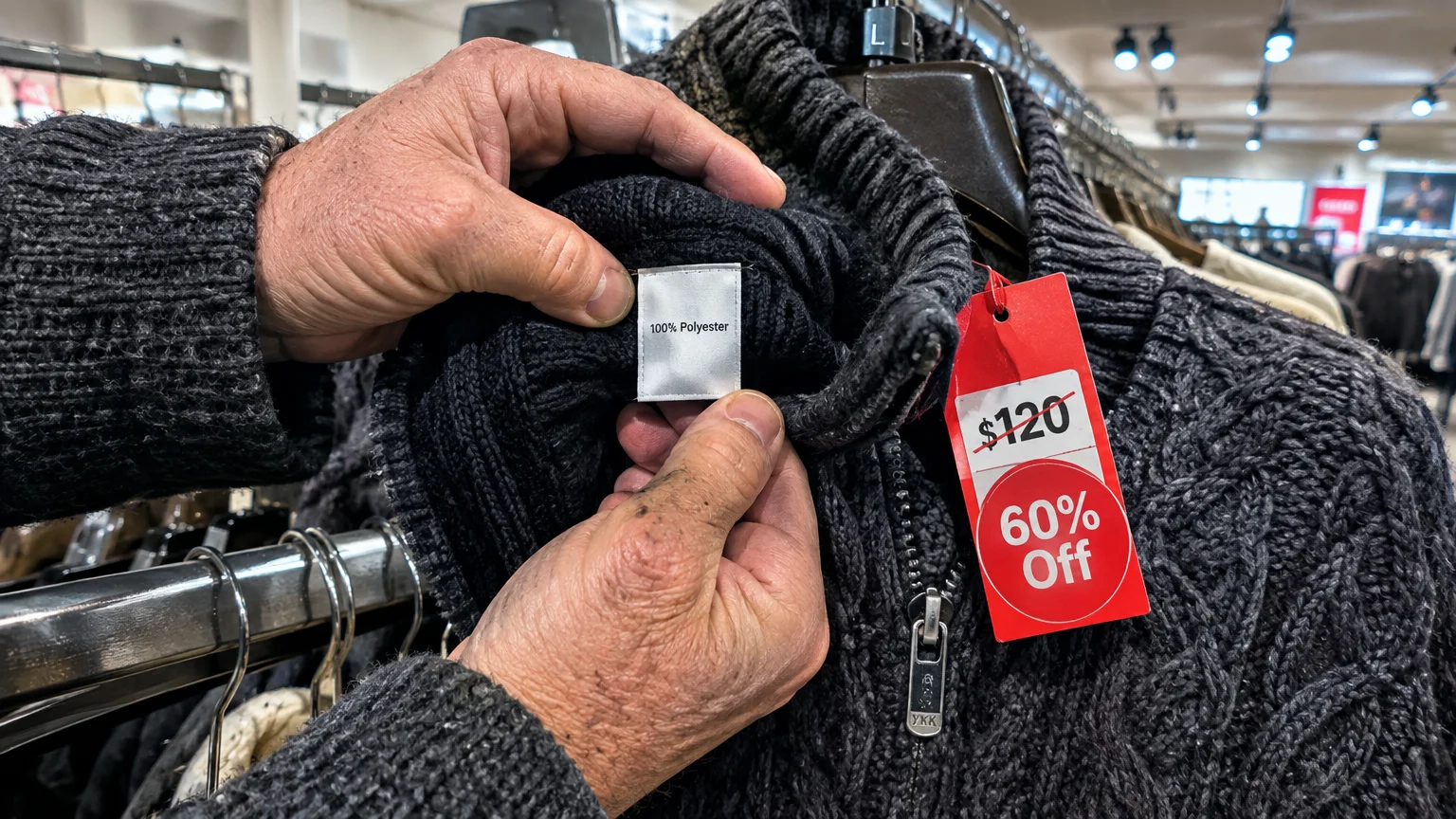
Manufacturers lower their COGS—the direct cost of goods sold—by substituting natural fibers with synthetic polyester blends and flimsy plastic zippers. These garments never hung on flagship department store hangers.
A sweater tagged with a $120 list price often costs less than $8 to fabricate overseas. The retailer slashes the price to $40, convincing you that you saved $80 on luxury quality.
The strike-through comparison price printed on the tag is almost always purely fictional. For authentic designer apparel clearance, purchase your winter staples during seasonal inventory cleanouts in late January.
3. Fine Jewelry and Department Store Diamonds
Jewelry counters heavily promote Black Friday sales offering dramatic cuts of 70% to 80% on necklaces, rings, and earrings. In reality, retail jewelry carries baseline retail markups ranging from 300% to 500% above wholesale material value.
A ring tagged at an original price of $1,000 often carries a true manufacturing and materials value under $150. Even after an advertised 75% discount, you still pay a substantial markup on commercial-grade gems.
Retailers also use promotional lighting to make cloudy, low-grade diamonds appear clear and brilliant in display cases. Once you examine the stones under natural daylight, structural flaws and yellow tints become obvious.
Independent appraisal data reveals these discounts run continuously throughout the entire calendar year. You will secure superior value by working with independent local gemologists during the late summer lull.
4. Mattresses and Indoor Furniture
Showrooms run flashy holiday campaigns claiming Black Friday delivers the absolute best mattress and living room sofa pricing. Yet furniture manufacturers introduce their new product lines twice a year, specifically in February and August.
Retailers slash existing inventory to clear showroom floor space in January and July rather than late November. Consumers often face inflated holiday price tags masked by free delivery bundles that carry minimal retail value.
Promotional mattresses sold during holiday rushes often feature lower-density support foam that sags within two years. Replacing a sagging bed destroys any initial savings you thought you captured at checkout.
A mattress marked down to $899 in November frequently sells for $750 or less during Presidents Day weekend sales in mid-February. Wait for early-year clearance periods to negotiate the lowest out-of-pocket price.
5. Major Kitchen and Laundry Appliances
Retailers push refrigerator, dishwasher, and washing machine promotions heavily during late November. However, major appliance manufacturers unveil their next-generation models annually in September and October.
Consequently, the most aggressive liquidation pricing on existing models appears during Labor Day and throughout early October. Holiday discounts rarely beat early autumn promotions and often feature extended delivery delays stretching into January.
Big-box retailers also bundle matching appliances at seemingly deep discounts while inflating individual installation and haul-away charges. Those ancillary fees can quietly add $150–$300 to your total invoice.
Holiday buyers also risk settling for inefficient appliances that consume significant electricity. Checking baseline electrical usage helps you balance purchase price against ongoing utility expenses over the machine’s lifespan.
6. Home Fitness Equipment and Treadmills
Cardio equipment, adjustable dumbbells, and rowing machines occupy prime catalog space in November advertising circulars. Retailers want consumers to purchase large exercise hardware before holiday gift budgets are completely exhausted.
Historical pricing data demonstrates that fitness equipment prices drop significantly in January. Manufacturers reserve their most aggressive direct-to-consumer discounts for New Year resolution sales.
Furthermore, gym equipment purchases in November frequently carry freight charges of $75–$150 that evaporate during January promotions. Delaying your purchase by six weeks saves substantial cash on identical equipment.
Waiting until January also opens opportunities to buy lightly used, premium gear from local owners upgrading their home gyms. Secondary marketplaces provide top-tier exercise hardware for 50%–70% below retail list prices.
7. Winter Outerwear and Heavy Cold-Weather Gear
Parkas, insulated gloves, and thermal boots appear heavily discounted during late November shopping events. Despite bright sale tags, winter apparel sells at peak seasonal demand when freezing temperatures arrive.
Retailers offer nominal 15% to 25% discounts on coats that carry inflated seasonal retail pricing. True liquidation discounts of 50% to 70% off do not occur until late January and February.
Clothing chains must clear bulky winter outerwear to make physical room for incoming spring apparel lines. Holding off for 60 days can easily save $100–$200 on high-grade down jackets.
If you can layer existing clothing for a few weeks, your patience yields substantial savings. You will purchase superior cold-weather protection without paying seasonal retail premiums.
8. Hot Holiday Toys and Board Games
Parents and grandparents rush to purchase popular toys and board games on Black Friday to avoid anticipated stock shortages. Retailers capitalize on this urgency by maintaining toys near full list price during late November.
Big-box retailers systematically lower toy prices during the second and third weeks of December to clear remaining inventory. Stores face severe financial penalties if they carry surplus holiday toys into January.
Independent price trackers confirm that toy prices reach their annual lows roughly ten days before Christmas. Waiting until mid-December routinely shaves 20% to 40% off your total holiday gifting expenditure.
Unless an item is a rare collectible facing documented manufacturing shortages, patience always pays off. Retailers almost always oversupply mainstream toys, leading to steep pre-holiday price cuts.
9. Small Kitchen Appliance Bundles
Black Friday displays feature towering pyramids of 10-piece blender sets, multi-cookers, and digital air fryers priced at $19 to $39. These novelty appliance packages frequently use lightweight motors and fragile plastic gears that wear out quickly.
Manufacturers artificially inflate the list price to $80 or $100 to make the promotional tag look astonishing. In reality, these low-grade machines represent a poor ROI—return on investment—due to frequent breakdowns.
A cheap blender that burns out after fifteen uses delivers a dreadful cost per smoothie. Replacing broken gadgets repeatedly drains your household budget faster than buying one quality unit.
You are far better off buying a durable, repairable kitchen tool on sale during mid-year culinary promotions. Paying slightly more upfront for proven commercial build quality prevents costly replacements down the road.
10. Low-Tier Budget Laptops and Tablets
Door-buster flyers routinely advertise full-sized laptops and touch tablets for under $150. These computers rely on severely outdated processors, low-resolution screens, and sluggish eMMC flash storage rather than fast solid-state drives.
Such devices struggle to handle basic operating system updates and modern internet browsing within months of setup. The resulting slowdown leads to immediate user frustration and premature hardware replacement.
A machine with only 4GB of non-upgradable memory will freeze under routine multitasking. You waste $150 on hardware that cannot perform standard daily productivity tasks.
Authentic computing deals occur during back-to-school sales in July and August, when reputable brands discount mainstream business-grade laptops. Investing in robust hardware saves money over a multi-year computing lifecycle.
Step-by-Step Playbook
Applying practical black friday shopping tips shields your bank account from misleading promotional tactics. Begin your shopping plan four weeks prior to Black Friday by compiling an exact list of items you genuinely need.
Assign a strict ceiling price to each target item based on historical baseline value rather than advertised percentage discounts. This disciplined ceiling keeps you focused on actual dollar outflows.
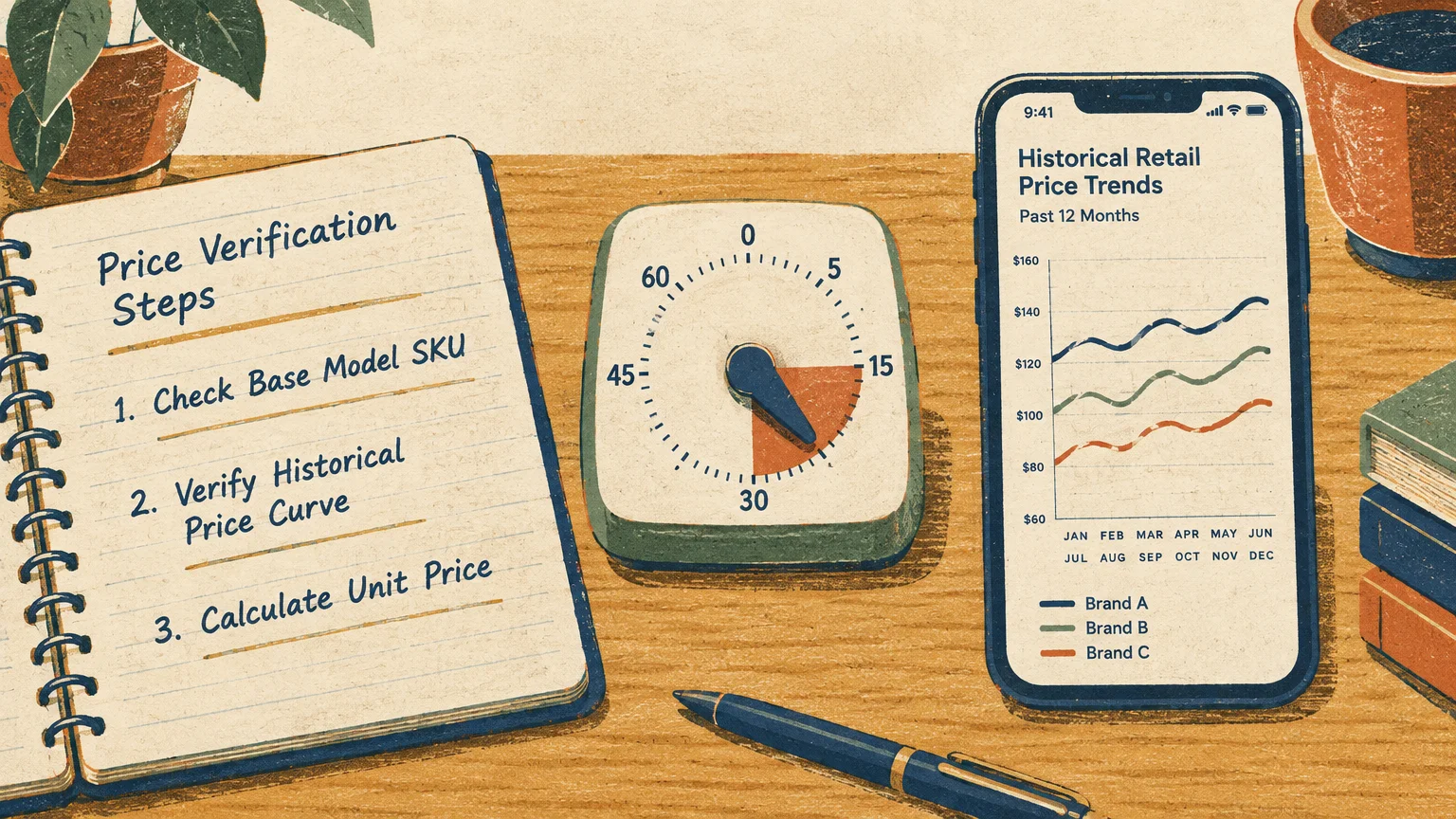
Your next step requires setting up browser price-tracking extensions to examine the 90-day price history of each product. California Business and Professions Code Section 17501 requires advertised former prices to be prevailing market prices within 90 days.
A major tracking study by Consumers’ Checkbook across 25 major retailers found that more than half of tracked items were on sale perpetually. Only Costco, Apple, and Target consistently offered bona fide sales off genuine regular prices.
When you spot a promotion, pause at your first checkpoint: verify the complete alphanumeric model number character by character. If the model number contains obscure letter combinations absent from the manufacturer catalog, stop immediately.
This indicates a derivative product manufactured with stripped components specifically for holiday promotional clearance. Walk away from derivative electronics and redirect your dollars toward certified regular inventory.
At your second checkpoint, compare the current price against historical tracking graphs across multiple online merchants. Research by consumer organization Which? revealed that 83% to 98% of Black Friday products were cheaper or identical in price at other times.
If the item traded for a lower price during the previous three months, do not buy it. Postpone your transaction until the natural seasonal liquidation window for that specific product category arrives.
At your final checkpoint, inspect shipping costs, return windows, and restocking terms before submitting payment. Reputable merchants provide clear, fee-free return procedures that protect your capital if products arrive defective.
Worked Examples
Worked Example 1: The Doorbuster Television Cost-Per-Use Calculation
Consider a retired couple evaluating two television options during the late November sales period. The first option is a Black Friday derivative 55-inch television priced at a seemingly irresistible $220.
The second option is a proven tier-one production model priced at $380 during an open-box January retail clearance. The derivative model features stripped backlighting and lasts only two years before display failure occurs.
Dividing $220 by 730 days yields an operational cost of approximately $0.30 per day of use. The couple must then spend another $250 or more to replace the broken screen prematurely.
In contrast, the $380 January clearance model operates reliably for eight years, delivering 2,920 days of service. That breaks down to an ultra-frugal cost of roughly $0.13 per day.
Waiting two months for genuine clearance cuts the daily cost of entertainment by more than half. You save $160 over five years while enjoying significantly superior visual quality.
Worked Example 2: The 30-60-90 Day Strategic Purchase Timeline
Implementing a phased purchasing calendar protects your liquidity and prevents holiday budget depletion. During the initial 30-day window covering November, focus spending exclusively on verified small electronics and consumable gifts.
Allocate $100–$200 for select genuine sales, while avoiding all major furniture, heavy fitness gear, and winter clothing. Hold your remaining cash reserves in an interest-bearing account to maintain financial flexibility.
Between day 31 and day 60, spanning January, execute planned purchases for treadmills, exercise bikes, and winter coats. Retailers liquidate winter apparel at 50% to 70% discounts, reducing a $300 outerwear budget to just $90–$120.
Between day 61 and day 90, arriving in February, purchase replacement mattresses and indoor living room furniture. Floor clearances ahead of new spring arrivals unlock savings of $200–$500 per major furniture piece.
By spreading purchases across 90 days, a household saves between $450 and $900 compared to rushed November spending. This disciplined cadence guarantees you buy at historical annual price floors.
Worked Example 3: Negotiation Script for Local Floor Clearance
Negotiating floor models provides immediate savings beyond advertised doorbuster gimmicks. Approach an appliance or furniture department manager during quiet mid-week morning hours with a polite, direct proposal.
State clearly: I am prepared to buy this floor display unit today for cash if we can agree on a 25% open-box discount. Can you authorize that markdown to clear floor space for incoming inventory?
If the manager hesitates, ask to have standard delivery and haul-away fees waived instead. Free shipping and old-unit removal immediately preserves $100–$150 in household funds.
Before completing payment, confirm in writing that full manufacturer warranty coverage remains active on the receipt. Never leave the store without documented confirmation of warranty terms and return windows.

Pitfalls, Safety, and When to Walk Away
Holiday doorbusters often come with punitive store return policies designed to trap unsuspecting shoppers. Many retailers slash their standard 30-day return window down to 14 days for promotional electronics.
Merchants frequently charge restocking fees ranging from 15% to 20% on opened tech products and large appliances. A $500 returned television can cost you $75–$100 just to place back on the counter.
Beware of unvetted third-party marketplace sellers offering massive discounts on holiday storefronts. Counterfeit electronics with faulty power adapters can create severe electrical short-circuit and fire hazards in your home.
Always verify UL or ETL electrical safety certifications before plugging discount appliances into household outlets. If a retailer refuses to provide return clarity or lacks certified hardware, walk away immediately.
Another danger involves store credit cards offering an instant 10%–15% discount at checkout. These retail cards carry predatory interest rates averaging 28%–32%, wiping out any purchase discount if an unpaid balance lingers.
A safer alternative is purchasing certified refurbished goods directly from reputable manufacturers with complete factory warranties. Refurbished units undergo rigorous multi-point testing and provide genuine 20%–40% discounts without retail trickery.

E-E-A-T Resources and Regulatory Protections
Federal regulations protect buyers against deceptive promotional practices through specific truth-in-advertising guidelines. The Federal Trade Commission enforces rules against deceptive pricing under 16 CFR Part 233.
These federal rules require former list prices to represent bona fide regular prices where substantial sales occurred. You can lodge complaints regarding deceptive retail pricing schemes directly through regulatory oversight portals.
Consumer protections via the FTC and billing/complaint help via the CFPB.
Tax basics at the IRS. Food safety/labeling via the FDA and the USDA.
Energy efficiency guidance via ENERGY STAR and the U.S. Department of Energy (DOE).
Consult these official public portals to verify corporate advertising compliance and research efficiency specifications before shopping. Informed consumers leverage established regulatory guidelines to hold unscrupulous merchants accountable.
FAQs
Is black friday worth it for holiday shoppers?
Black Friday offers legitimate value on select video game consoles, streaming sticks, and small personal electronics. However, major appliances, furniture, and winter clothing deliver substantially better discounts later in the winter season.
How can you spot fake black friday deals online?
Install dedicated price-tracking tools to view an item’s 90-day price history before purchasing. If the price spiked upward in October, the advertised November markdown is manufactured.
Why do retailers make special derivative electronics for Black Friday?
Manufacturers create derivative models with stripped hardware to hit low doorbuster price points without losing money. These unique model numbers also prevent shoppers from using store price-matching policies.
What date does black friday deals 2026 fall on?
For planning your holiday calendar, black friday deals 2026 will arrive on Friday, November 27, 2026. Cyber Monday follows shortly thereafter on Monday, November 30, 2026.
How do retailers trick shoppers with anchor pricing?
Retailers inflate the original strike-through price weeks before promotional events to make discounts appear larger. Federal pricing guidelines prohibit this practice, but enforcement varies widely across state jurisdictions.
Are black friday scams common on online retail marketplaces?
Yes, fraudulent third-party merchants frequently flood online marketplaces with counterfeit goods and fake tracking numbers. Protect yourself by purchasing only from established storefronts with verified customer review histories.
Informational purposes only; not financial, legal, medical, or technical advice. Prices, policies, and availability vary by provider and region—confirm details with official sources. Consult qualified professionals for personalized guidance.