Tracking down the best fried chicken by state takes more than scrolling viral rankings—you need spots that deliver crisp crust, safe kitchens, and fair prices. In 2026, restaurant bills and fuel costs make every road-trip stop count.
This guide pairs verified 2026 state highlights and national chain benchmarks with practical grocery habits. You will see how local legends compare across regions and how unit pricing keeps your weekly food budget intact.
Whether you plan a cross-country fried chicken road trip or fry dinner at home, smart label checks protect both your wallet and your health.
Best Fried Chicken by State: Icons, Rankings, and Costs
Major national guides updated their state-by-state rankings in late 2026, including Business Insider and Yelp on October 7, Tasting Table on October 30, and FinanceBuzz on November 15. Many lists rely on diner ratings, while Business Insider and Yelp required passing health inspection scores as of September 24, 2026.
Because restaurant quality shifts quickly, checking recent inspection scores and current menu prices before driving across town saves you from expensive disappointments. Even famous names change locations, adjust hours, or alter recipes as food costs climb.
Verified State Icons Worth the Detour
Several historic fried chicken restaurants continue to anchor state lists nationwide. In Anchorage, Alaska, Lucky Wishbone has served crispy fried chicken since 1955 and remains a recurring favorite on national state-by-state roundups.
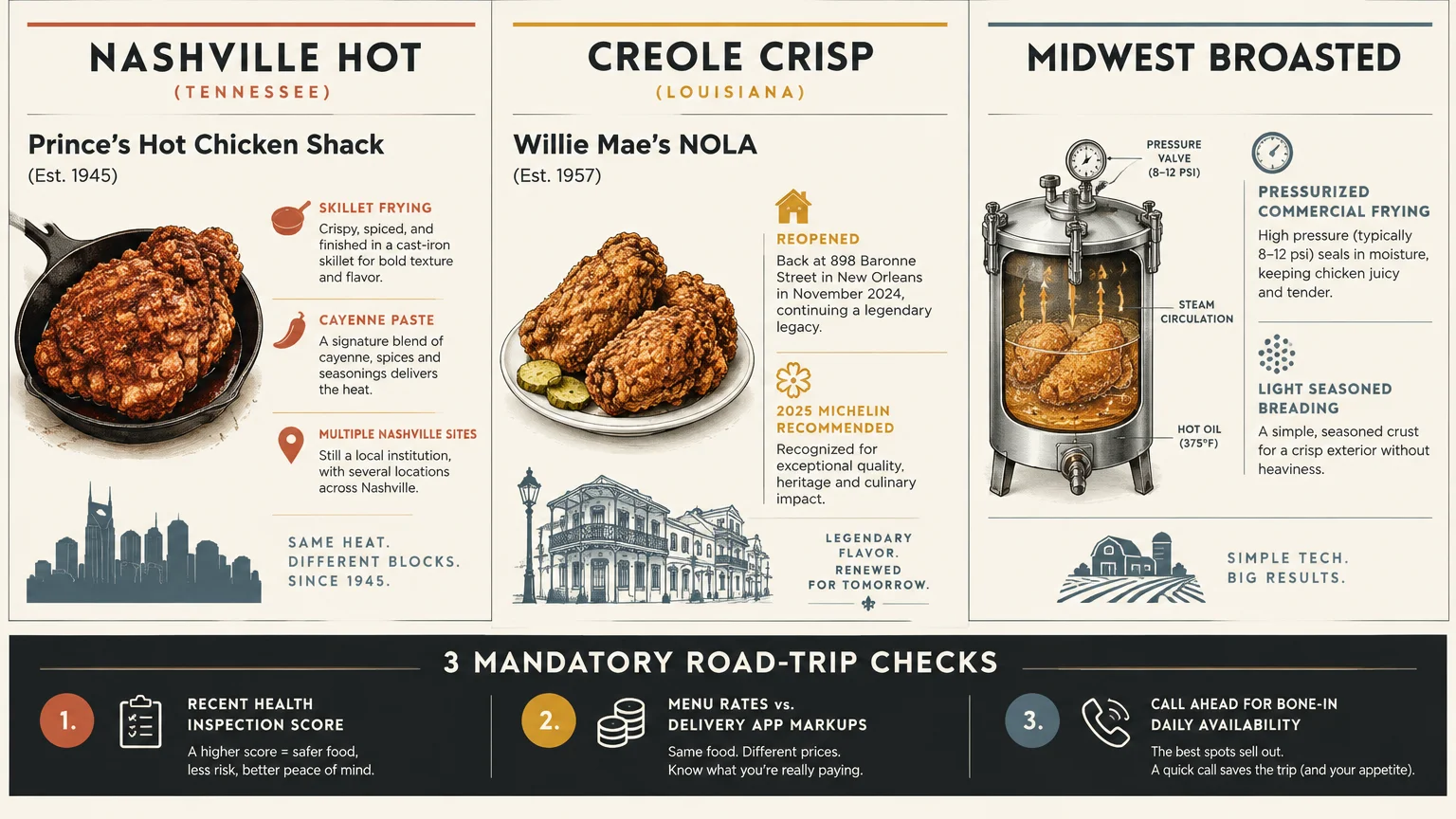
In Louisiana, Willie Mae’s started in New Orleans’ Tremé neighborhood in 1957 and won a 2005 James Beard America’s Classic Award. After an April 2023 fire closed the original building, the Seaton family opened Willie Mae’s NOLA at 898 Baronne Street in November 2024.
That downtown New Orleans kitchen earned a Recommended Restaurant spot in the 2025 Michelin Guide for the American South. Meanwhile, the family paused operations at its Venice, California outpost in February 2025, proving why checking current status matters.
Tennessee’s Nashville hot chicken heritage traces back to Prince’s Hot Chicken Shack, founded by James Thornton Prince in 1945 and honored with a 2016 James Beard America’s Classic Award. After a 2018 fire closed its Ewing Drive site, Prince’s now serves multiple Nashville-area spots.
You can visit Prince’s on Nolensville Pike, inside Assembly Food Hall on Broadway, or at Tanger Outlets in Antioch. For multi-state consistency, Gus’s World Famous Fried Chicken began in Mason, Tennessee, and now brings spicy, crisp chicken to more than 30 U.S. locations.
Regional Styles Across the Best Fried Chicken USA Map
If your home state’s favorite isn’t a century-old legend, understanding regional cooking styles helps you spot standout local kitchens. Across the Deep South, cooks rely on buttermilk brines, seasoned flour, and cast-iron or pressure frying for shattering skin.
In the Midwest, many top chicken spots specialize in broasted chicken, which combines marination with pressurized frying to lock in moisture while keeping breading light. Along the coasts, Korean-style double-fried wings and crispy chicken sandwiches dominate urban food halls.
Before visiting any state pick, verify three details online: current operating status, recent local health department grades, and whether the menu prices reflect dining-room rates or inflated delivery-app markups. A quick phone call also confirms if bone-in chicken sells out before dinner.
National Chains vs. Local Favorites in 2026
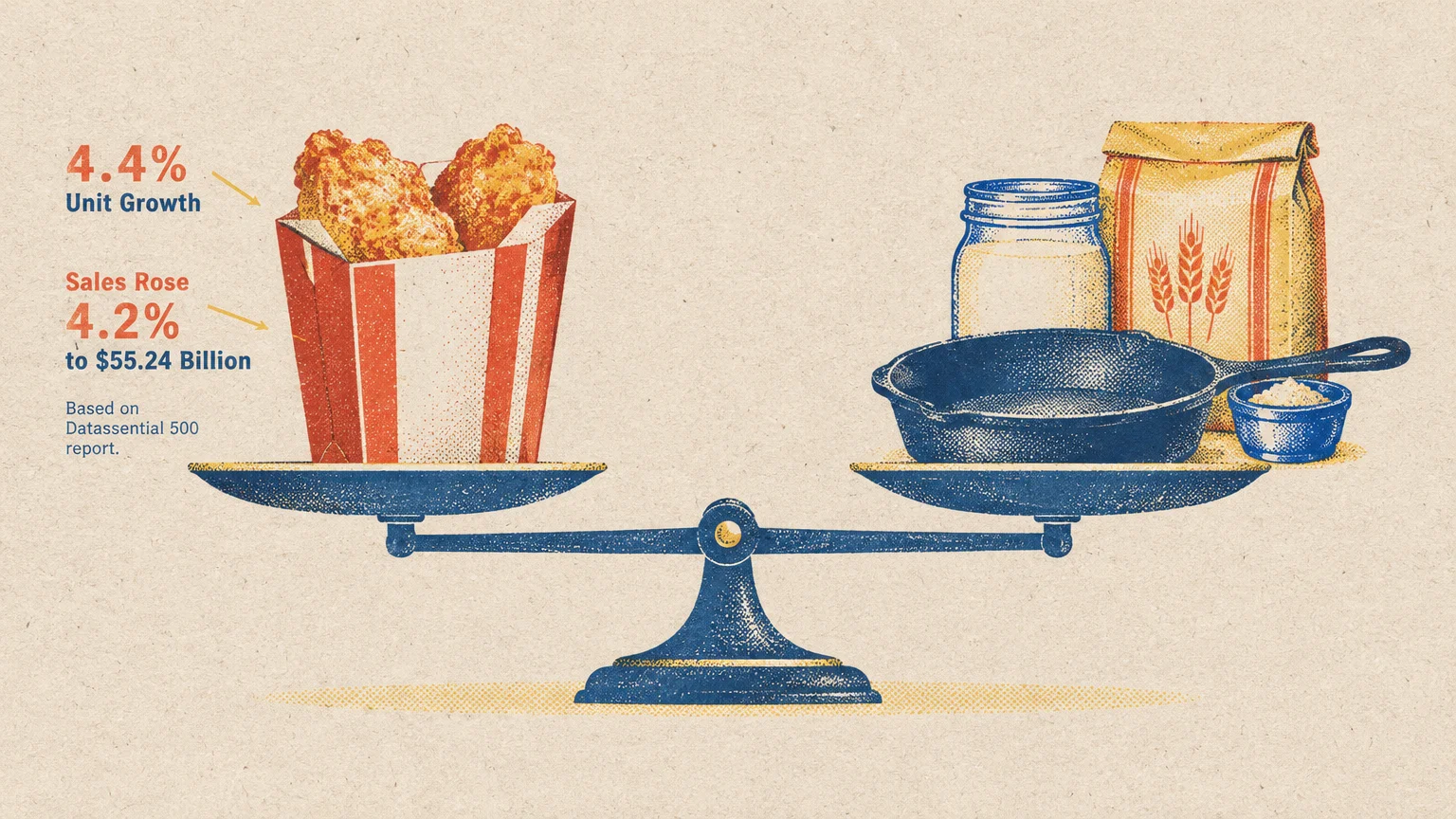
According to the 2026 Datassential 500 report, limited-service chicken is the fastest-growing segment among America’s top 500 chains, expanding unit counts by 4.4% in 2025 as segment sales rose 4.2% to $55.24 billion. Chick-fil-A won America’s Favorite Chain for a second consecutive year, adding 178 net units.
Raising Cane’s grew locations by 10.3% with 85 net openings, while Wingstop added 382 net units. By contrast, legacy chains struggled; KFC closed 312 U.S. restaurants—7.64% of its domestic footprint—in the 12 months ending July 2026.
Popeyes posted six straight quarters of negative U.S. same-store sales through the first quarter of 2026, down 6.5%, and its 136-unit franchisee Sailormen filed for Chapter 11 bankruptcy in 2026. A November 2026 FinanceBuzz review found Popeyes menu prices jumped an average of 86% since 2014.
Value deals still exist if you order carefully. In a May 2026 Tasting Table price comparison benchmarked in Texas, Chick-fil-A offered the cheapest three-piece combo at $9.19, while Church’s Texas Chicken offered the lowest single value meal at $5.99.
KFC’s November 2026 lineup features $7, $9, and $11 Box Feasts, a $10 weekday Bucket of the Day, and a $5.49 Classic Chicken Sandwich. However, an eight-piece KFC bucket runs $19.49 to $22.79 depending on your state and ordering app.
What a Fried Chicken Road Trip Actually Costs
According to the U.S. Bureau of Labor Statistics (BLS) and USDA Economic Research Service (ERS) Food Price Outlook, restaurant prices rose 3.5% year-over-year in September 2026 and climbed another 0.5% in October 2026. Full-service meals rose 3.8%, while fast-food meals rose 3.2%.
By comparison, grocery prices rose just 1.8% year-over-year in September 2026, and meat, poultry, fish, and eggs ticked up only 0.3%. Per the BLS Consumer Expenditure Survey, U.S. households spent an average of $4,142 on food away from home in 2025.
That dining-out figure jumped 5.0% from $3,945 in 2024, alongside $6,491 spent on groceries. Across the country, USDA ERS data show food away from home captured $1.41 trillion—or 56.3%—of the $2.51 trillion Americans spent on food in 2025.
Fuel costs also shape your road-trip budget. AAA reported on November 12, 2026, that regular gas averaged $3.90 per gallon nationwide, slipping to $3.87 per gallon on November 13—roughly 79 to 83 cents higher than November 2025’s $3.08 average.
State pump gaps are dramatic; AAA listed the lowest averages in North Carolina at $3.18, Texas at $3.38, and Georgia at $3.40 per gallon. Drivers in Hawaii and California paid $5.63 per gallon, while Nevada averaged $4.96.
How to Read Prices and Packages
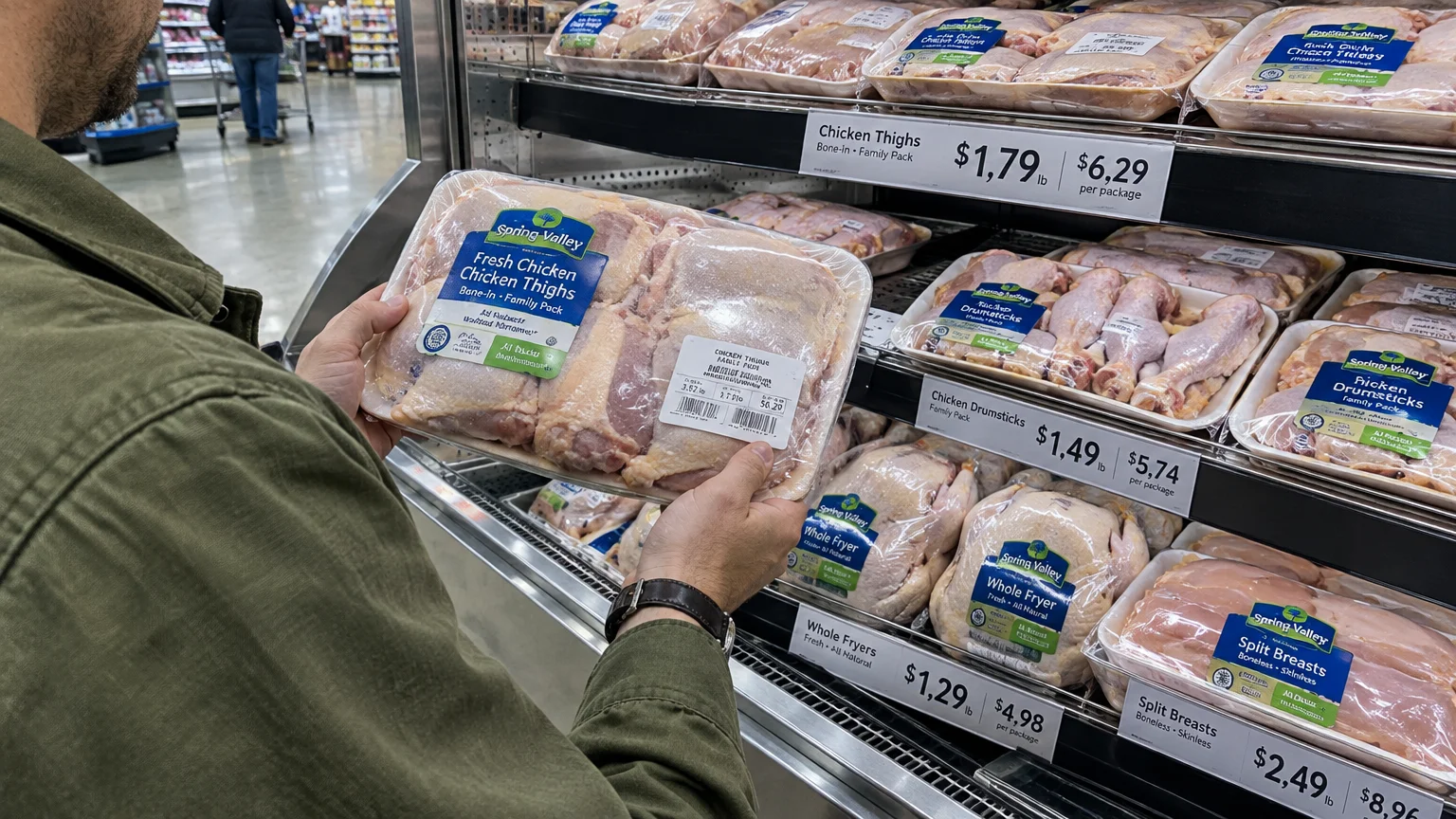
Whether you buy raw chicken to fry at home or frozen tenders for busy weeknights, shelf tags tell the true story. Start by checking the unit price—the cost per ounce or per pound printed in small type on the store shelf label.
Unit pricing strips away flashy box sizes and lets you compare fresh whole birds, boneless breasts, and frozen bags on equal footing. According to BLS retail data, fresh whole chicken averaged $2.01 per pound in July 2026, while boneless chicken breast averaged $4.20 per pound in September 2026.
Meanwhile, boneless breast actually fell 16.8% from $4.99 per pound in January 2023. Knowing those benchmarks helps you spot when a pre-marinated or pre-breaded package charges restaurant-level markups for cheap flour and water.
Spotting Shrinkflation in the Freezer Aisle
Shrinkflation happens when a food maker shrinks package weight while keeping the retail price identical, quietly raising your unit cost. Suppose a bag of frozen breaded chicken strips drops from 24 ounces to 20 ounces while staying priced at $8.00.
At 24 ounces, you paid 33 cents per ounce; at 20 ounces, that exact same $8.00 price jumps to 40 cents per ounce. Always divide the shelf price by total ounces if the store tag omits the unit rate.
Watch for packaging tricks like deeper bag gussets, wider cardboard trays, or heavier glazes that count toward net weight. When breading and sugary sauce make up a third of a frozen bag, your cost per ounce of actual poultry climbs sharply.
Private Label vs. National Brand Pricing
Store-brand flour, buttermilk, cooking oil, and frozen chicken wings typically cost noticeably less than national labels because supermarkets skip heavy advertising budgets. Checking the unit price across bottom and top shelves often reveals identical nutritional profiles at lower cost.
Compare ingredients lists side by side before choosing a name brand. If the store-brand canola oil or all-purpose flour lists the exact same single ingredient and enrichment standard, keeping your dollars in your pocket makes immediate sense.
Nutrition & Safety, in Plain English
Front-of-package slogans like natural, homestyle, or crispy baked serve marketing goals, not strict nutrition rules. Under federal oversight, real facts live on the standardized Nutrition Facts panel and the ingredients list, where components appear in descending order by weight.
When scanning frozen fried chicken, breading mixes, or dipping sauces, focus first on added sugars—sugars introduced during processing rather than naturally present in dairy or fruit. Sweet barbecue sauces, honey mustard cups, and sweet tea glazes pack high added sugar per tablespoon.
Next, check sodium and saturated fat per realistic serving, not the tiny serving printed on the box. Many frozen breaded fillets and chain fried chicken meals exceed half a day’s sodium in one sitting, especially when paired with seasoned fries.
Also watch for ultra-processed ingredients—industrial formulations containing refined starches, modified oils, emulsifiers, and flavor enhancers you would not keep in a home pantry. Whole chicken coated in flour, spices, and egg stays far simpler than factory-formed chicken patties.
What USP Verified Means for Supplements
Some travelers buy digestive enzymes, fiber pills, or metabolism capsules after heavy fried meals, yet dietary supplements do not go through the same pre-market approval as prescription drugs. That is why USP verification matters if you ever purchase vitamins or minerals.
A mark from the U.S. Pharmacopeia (USP) means an independent nonprofit tested the product to confirm it contains the listed ingredients in declared strengths, dissolves properly, and lacks harmful contaminants. It does not prove a supplement cures disease or cancels out greasy food.
Food Safety Rules for Road Trips and Home Kitchens
Per the USDA Food Safety and Inspection Service (FSIS), all poultry—whole birds, breasts, thighs, legs, and wings—must reach a safe minimum internal temperature of 165°F (73.9°C). Rely on a digital food thermometer in the thickest meat, never meat color or clear juices.
On a fried chicken road trip, leftover handling matters just as much as cooking heat. Harmful bacteria multiply fastest in the Danger Zone between 40°F and 140°F, doubling in as little as 20 minutes.
USDA FSIS guidelines require refrigerating cooked chicken and restaurant leftovers at 40°F or below within two hours—or within one hour if outside air temperatures top 90°F. Keep hot takeout at 140°F or above, pack an insulated cooler with ice packs in the car, and reheat leftovers to 165°F.
Smart Store Strategy
Many shoppers hear they should shop only the store perimeter and skip the center aisles completely. That rule fails frugal cooks because while fresh chicken sits along the perimeter meat case, affordable pantry staples like flour, dry beans, rice, oats, and spices live in the center aisles.
Instead of avoiding aisles, avoid impulse displays at endcaps and checkout lanes. Walk in with a written list organized by store section so you grab cheap dry goods without tossing high-margin snacks into your cart.
Loss Leaders, Rain Checks, and Digital Coupons
Supermarkets regularly advertise loss leaders—items priced near or below store cost, such as discounted chicken leg quarters or whole birds, to pull shoppers through the doors. Stocking your freezer when poultry hits a rock-bottom weekly circular price slashes monthly protein costs.
If a store runs out of an advertised chicken special, ask customer service for a rain check—a written voucher honoring the sale price once new stock arrives. Pair circular specials with free store digital coupons, and check warehouse club rules carefully so membership fees never erase your savings.
Pantry Principles and Swap Logic
Building crispy fried chicken at home requires an inexpensive, flexible pantry rather than specialty jars. Keep all-purpose flour, cornstarch, baking powder, garlic powder, paprika, black pepper, kosher salt, and high-smoke-point vegetable or canola oil on hand.
Use smart swap logic before buying single-use ingredients. If a recipe calls for buttermilk and you only have plain milk, stir in a tablespoon of lemon juice or vinegar per cup of milk and wait a few minutes instead of buying a carton that spoils.
Similarly, swap pricey panko crumbs for crushed plain cornflakes or toasted stale bread pulsed in a blender. Keeping rice, dried beans, cabbage, carrots, and potatoes in stock turns fried chicken nights into complete, balanced meals without expensive takeout sides.
Worked Examples
Understanding why chicken dominates American budgets starts with livestock math. BLS retail data show ground chuck hit $6.73 per pound in October 2026 and regular ground beef reached $6.76 per pound—near August 2026’s $6.92 record—while U.S. cattle herds shrank to 86 million head, the smallest since 1951.
Meanwhile, more than 95% of chicken consumed in America is raised domestically, shielding poultry from direct import tariff shocks. USDA ERS projects record broiler chicken availability of 102.8 pounds per person in 2026, nearly double beef’s 56.9 pounds and pork’s 50.9 pounds.
A One-Week, $50 Grocery Basket for Two
You can feed two adults for seven days on roughly $50 by anchoring meals around whole chicken and inexpensive center-aisle staples. Allocate the largest share of your budget to two fresh whole chickens (averaging $2.01 per pound), a dozen eggs, milk, and a block of cheddar cheese.
Add dry pinto beans, brown rice, rolled oats, all-purpose flour, cooking oil, onions, carrots, cabbage, potatoes, and frozen mixed vegetables. For breakfasts, cook rolled oats with a splash of milk or scramble eggs with sautéed onions and toast.
Lunches rely on reheated rice-and-bean bowls topped with shredded chicken and crisp cabbage slaw. Four core dinners rotate effortlessly: buttermilk-dredged pan-fried chicken with mashed potatoes and steamed mixed vegetables on night one, followed by spiced chicken-and-bean skillets on night two.
Night three uses leftover chopped poultry in a carrot-and-cabbage stir-fry over rice, while night four turns the simmered chicken carcasses into hearty noodle or rice soup. Every part of the bird gets used, stretching protein dollars without sacrificing nutrition.
Is It Cheaper to Cook Fried Chicken at Home?
Compare a weekend family meal using real 2026 benchmarks. An eight-piece restaurant bucket at KFC runs $19.49 to $22.79 before tax, drinks, or sides, and adding large fries at chains like Popeyes—where large Cajun fries climbed from $3.99 to nearly $8—pushes dinner even higher.
At $2.01 per pound for fresh whole chicken, cutting up one whole bird at home yields roughly eight to ten pieces for a fraction of takeout cost. Adding store-brand flour, common spices, a splash of soured milk, and reusable frying oil keeps the total home plate cost low.
Even if you buy boneless chicken breasts at $4.20 per pound to make homemade crispy tenders, cooking two pounds at home feeds multiple people for less than two $9.19 fast-food combos. Choosing store-brand flour and oil over national brands trims your pantry restock bill even further.
The 10-Minute Meal-Prep Routine
Once your homemade or leftover restaurant chicken cools safely below the Danger Zone within two hours, run a 10-minute prep routine. Pull remaining meat off the bones into two airtight shallow containers so everything chills evenly at 40°F or lower.
Slice cabbage, carrots, and onions into a third container while bones simmer lightly on the stove for quick broth. During busy weekdays, you can toss pre-cut chicken into hot broth, pan-toast wraps, or crisp tenders in the oven to 165°F in minutes.
Brand & Retailer Decisions (Neutral)
Smart shoppers stay loyal to value, not brand logos. When choosing store-brand staples—such as flour, cornstarch, baking powder, or frozen chicken pieces—check whether the nutritional values, net weights, and ingredient lists match the national label sitting beside them.
Still, national brands earn their higher price in specific situations. If someone in your household manages severe food allergies, a brand with dedicated allergen-free facilities and transparent cross-contact labeling provides crucial peace of mind.
Name brands can also win on performance, such as specialty seasoning blends, consistent pickle brines, or frying oils formulated for higher heat stability. Test one store-brand swap per shopping trip, keep what cooks well, and return only to name brands that earn the price gap.
Apply the same skepticism to the pharmacy aisle. Before taking any vitamin, herbal blend, or digestive supplement—even one carrying third-party USP verification—talk with a doctor or pharmacist so active compounds do not interact unexpectedly with prescription medications.
FAQs
Are store brands really the same product?
Not always identical, though private-label staples are frequently produced to similar quality standards by large food manufacturers. Check the ingredients list and Nutrition Facts panel side by side; for single-ingredient items like flour or sugar, the cheaper store brand usually performs identically.
Do coupons still matter for groceries and fried chicken chains?
Yes, when you apply them to items already on your list. Digital grocery coupons stack well on loss-leader poultry sales, while chain apps often unlock value bundles—like $5.99 meals or $10 weekday buckets—that beat standard walk-in menu boards.
What does USP mean on vitamins and supplements?
A USP Verified mark means the U.S. Pharmacopeia independently tested the supplement to verify potency, purity, and manufacturing quality. It confirms what is inside the bottle matches the label, though it does not test whether a supplement prevents illness or improves health outcomes.
How do I avoid impulse buys at the grocery store or drive-thru?
Never shop hungry, stick to a pre-written grocery list, and compare unit prices before grabbing eye-level endcap displays. At fried chicken drive-thrus, check menu prices in the restaurant app beforehand so high-margin fries, desserts, and delivery fees do not inflate your bill.
What about buying in bulk for one or two people?
Buying family packs of chicken thighs or whole birds saves money only if you freeze portions immediately in dated freezer bags. Bulk cooking oils or spices expire or turn rancid before small households finish them, turning a cheap unit price into kitchen waste.
How can I keep fried chicken safe on a road trip?
Pack an insulated cooler with ice packs before you leave, and refrigerate restaurant leftovers at 40°F or below within two hours of serving—or one hour if temperatures top 90°F. Reheat leftovers to an internal temperature of 165°F before eating.
Food safety and labeling via the U.S. Food & Drug Administration (FDA) and the U.S. Department of Agriculture (USDA).
Dietary supplements information via the NIH Office of Dietary Supplements (ODS) and third-party standards at the U.S. Pharmacopeia (USP).
Consumer protection and advertising basics via the FTC. General health guidance via the CDC.
This guide is for informational purposes only and is not medical or nutrition advice. Always read product labels carefully and consult a qualified healthcare professional about supplements, food allergies, and medication interactions.
Restaurant menus, gas prices, grocery specials, and availability vary by store, state, and season.