
Rising prices do not hit every ZIP code equally, and the states with highest inflation squeeze fixed incomes fast. Knowing where costs climb sharpest helps you target the exact bills draining your paycheck or pension.
Recent national data shows energy, shelter, and food still pressure household cash flow across the country. Below, you will find the ten hardest-hit states alongside state-specific moves to stretch your budget right away.
You will also get a retiree-ready budget framework, stepwise utility cuts, safe home repairs, and real dollar examples. Every strategy relies on plain math and simple weekly habits you can start today.
Why Inflation by State Feels So Different
The U.S. Bureau of Labor Statistics (BLS) tracks consumer prices across four regions rather than individual states. Over the 12 months ending September 2026, overall prices rose 3.7%, while Northeast and Midwest prices climbed 4.2%.
Energy jumped 20.4% nationally during that period, led by a 74.2% surge in fuel oil and 34.2% higher gasoline. Shelter costs rose 3.2% and food climbed 2.5%, creating a persistent cost of living increase for essentials.
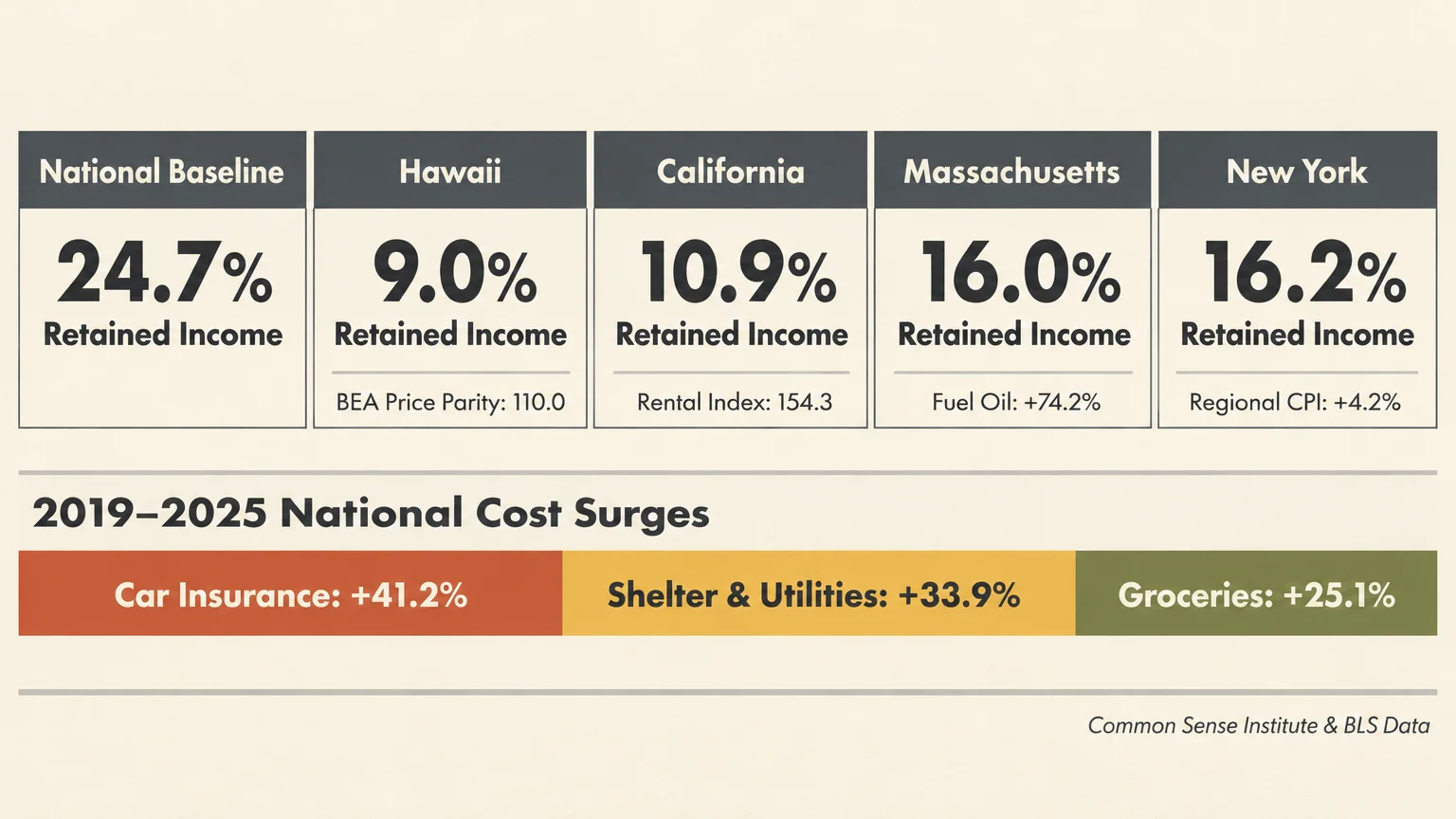
To measure inflation by state, the Common Sense Institute analyzed how much income a four-person household keeps after taxes and core bills. Nationally, families retained 24.7% of gross pay in early 2026 after losing ground to 2019–2025 price jumps.
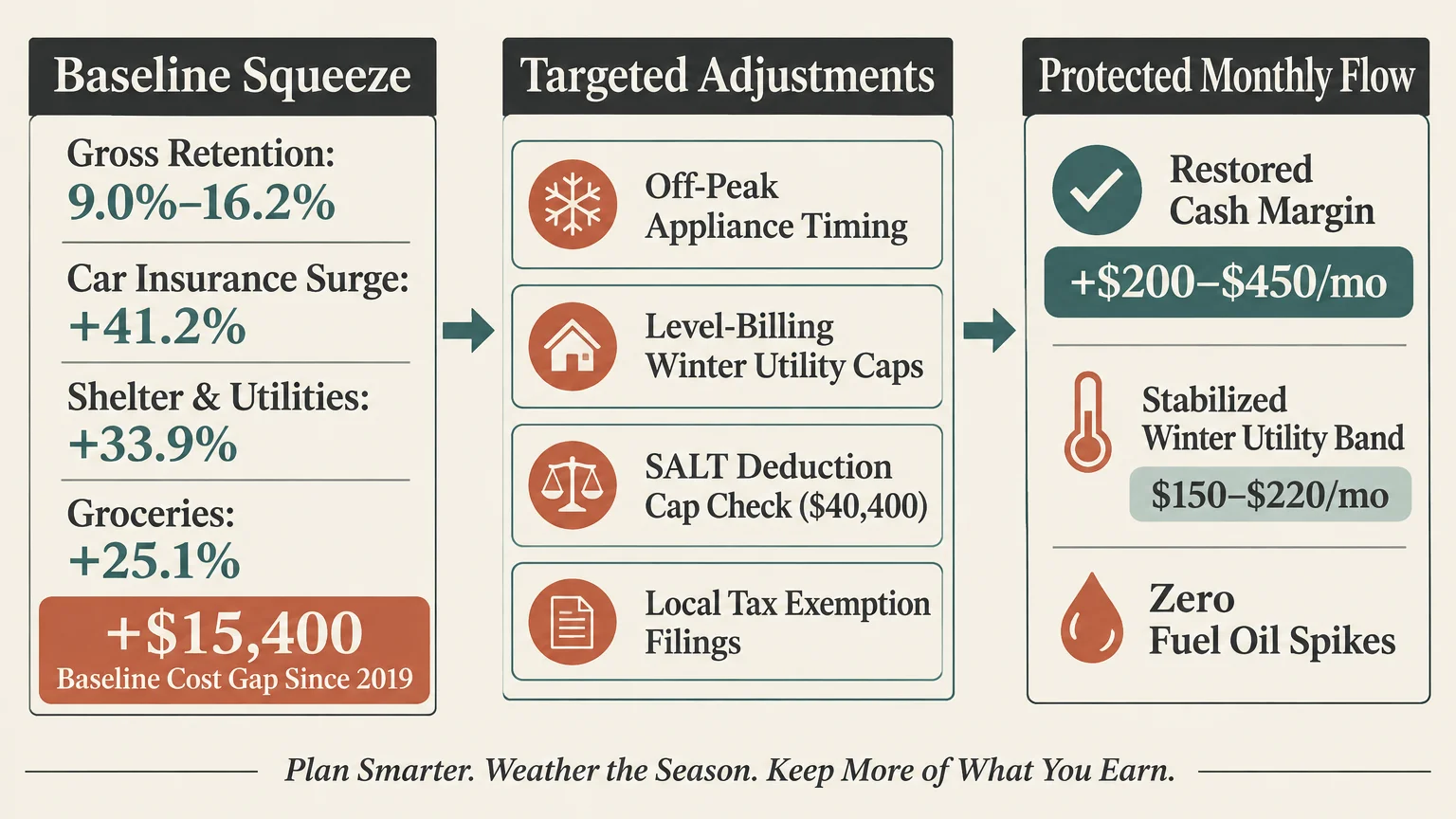
During those six years, groceries jumped 25.1%, shelter and utilities surged 33.9%, and car insurance climbed 41.2%. That squeeze forced the average household to spend $15,400 more in 2025 than in 2019 just for basics.
The 10 States Hit Hardest and How to Stretch Your Budget
The ten states below ranked least affordable in the Common Sense Institute March 2026 affordability analysis. Each section pairs local cost pressures with practical ways to stretch your budget without cutting safety or comfort.
1. Hawaii
Hawaii residents kept just 9.0% of gross income after core bills, leaving roughly $800 per month. U.S. Bureau of Economic Analysis (BEA) Regional Price Parities also put Hawaii overall prices at 110.0 compared to the 100.0 national baseline.
Cut imported grocery markups by building meals around local produce, rice, and warehouse bulk staples. Manage high island electric rates by air-drying laundry and running major appliances outside peak evening utility hours.
2. California
California families retained only 10.9% of gross income, driven by the highest state price level at 110.7 on the BEA scale. California rental housing costs hit 154.3, more than half again the national average.
Enroll in time-of-use utility plans that reward running dishwashers and laundry before late afternoon. Also check whether the $40,400 federal state and local tax (SALT) deduction cap for 2026 lowers your income tax bill.
3. Massachusetts
Massachusetts households retained 16.0% of income as New England inflation reached 4.3% in BLS September 2026 data. Heavy winter reliance on fuel oil exposes budgets when heating oil prices spike 74.2% year-over-year.
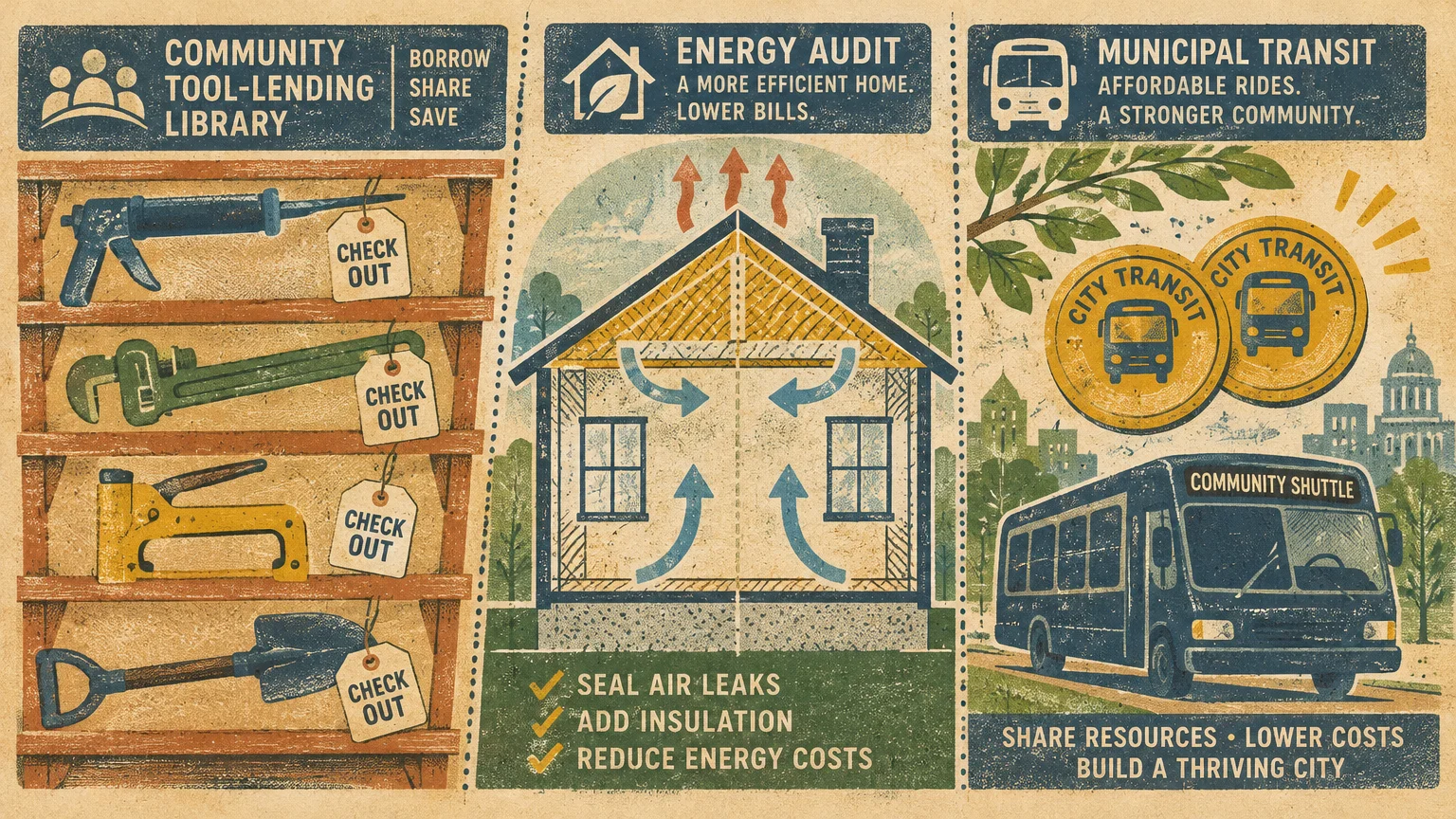
Schedule an energy audit through your utility to capture insulation incentives and heating tune-up rebates before winter. Seniors should also ask their town assessor about local property tax exemptions and circuit-breaker tax credits.
4. New York
New York households kept 16.2% of pay while Middle Atlantic consumer prices rose 4.2% over the past year. Housing, property taxes, and winter utility bills absorb a disproportionate share of fixed monthly checks.
Sign up for utility level-billing plans so winter heating spikes do not wreck January cash flow. Retirees should use reduced-fare transit passes, municipal senior grocery shuttles, and the 2026 SALT deduction rules when filing.
5. Oregon
Oregon residents held onto 16.8% of income after taxes, housing, utilities, and groceries. Although Oregon has no state sales tax, rising housing, insurance, and utility charges still erode retirement savings.
Shop around for homeowners and auto insurance policies annually to offset steep multi-year premium increases. Seal exterior doors and attic hatches before rainy seasons to keep electric or gas heat inside.
6. Florida
Florida households retained 18.1% of gross pay as housing, cooling bills, and insurance premiums stayed elevated. Long hot seasons turn air conditioning into the biggest controllable expense for retirees on fixed incomes.
Raise your thermostat two to three degrees when out and use ceiling fans to feel cooler at lower cost. Request an updated wind-mitigation home inspection, since verified roof and shutter upgrades often lower insurance rates.
7. Arizona
Arizona residents kept 19.6% of income, with Common Sense Institute data pointing directly to shelter and utility spikes. Triple-digit summer temperatures drive heavy afternoon air-conditioning loads across the desert.
Pre-cool your home during morning off-peak hours and close blackout curtains on south and west windows before noon. Swap thirsty grass for gravel or native plants to cut outdoor water bills and irrigation leaks.
8. Rhode Island
Rhode Island families retained 20.0% of gross income amid 4.3% New England inflation. Rhode Island also remains one of only eight states that still tax Social Security benefits in some form.
Review state age and income thresholds carefully before withdrawing extra money from retirement accounts that could trigger benefit taxes. Pair winter fuel-oil shopping clubs with simple weatherstripping to trim seasonal heating gallons.
9. Colorado
Colorado households retained 20.2% of income after core necessities. Colorado also taxes some Social Security income, though residents age 65 and older can subtract all federally taxed benefits on state returns.
Plan around Colorado Amendment 87, which replaces the 4.4% flat tax in 2027 with lower 3.7% and 4.2% brackets. Keep winter heating bills down by sealing dry-climate window gaps and changing furnace filters monthly.
10. New Jersey
New Jersey families kept 20.4% of pay, matching its 108.8 BEA overall price level—third highest in the nation. Property taxes, auto insurance, and Middle Atlantic energy costs remain major pressure points.
Claim state senior property tax freeze or rebate programs promptly and review whether itemizing under the $40,400 SALT cap helps. Compare generic prescriptions at club pharmacies and bundle car and home coverage carefully.
Retirement-Ready Budget That Holds Up
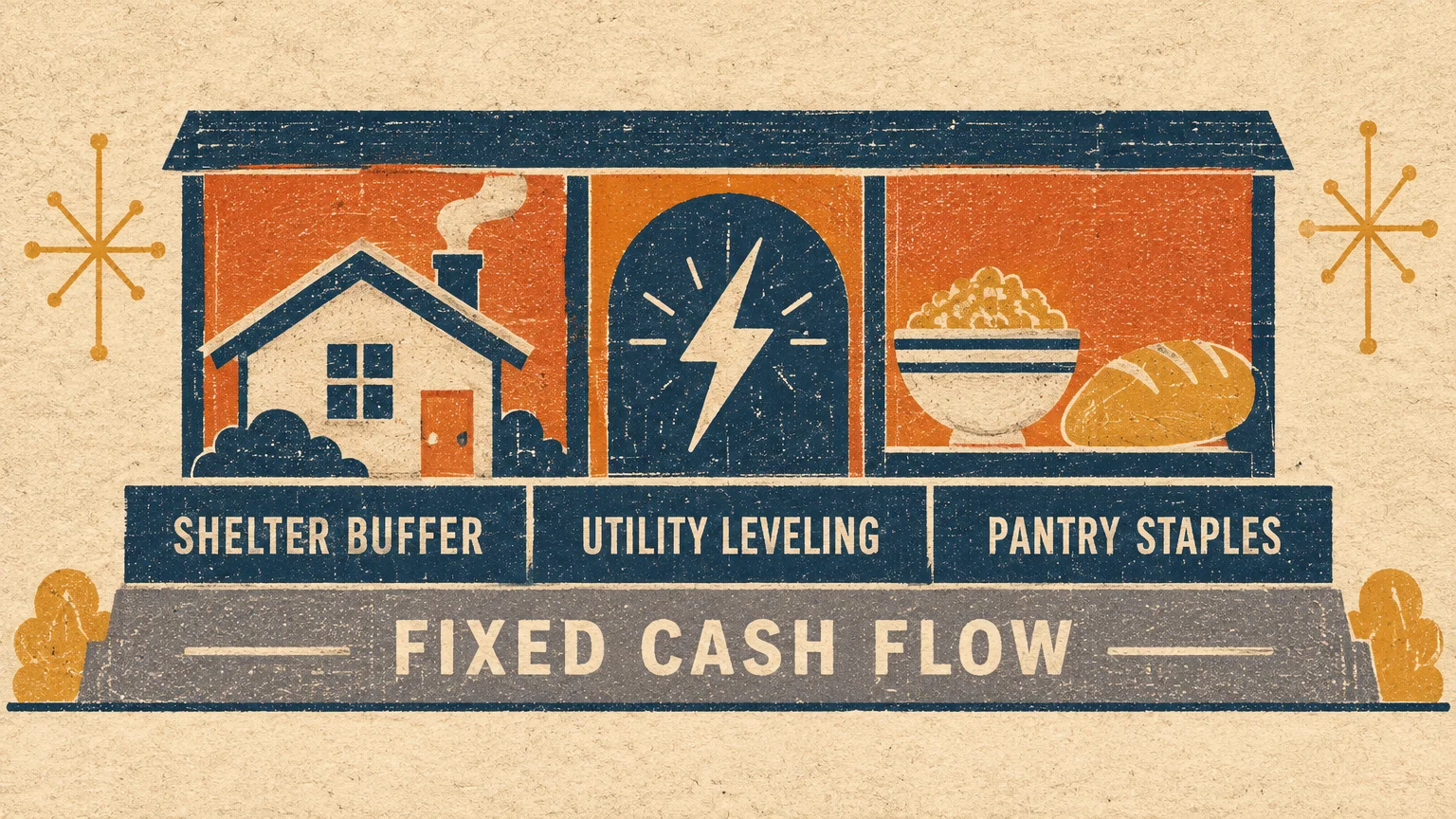
Smart budget tips for retirees start by separating every bill into a fixed expense or a variable expense. A fixed expense stays the same each month, like rent, whereas a variable expense changes with usage, like groceries or electricity.
Build your baseline around guaranteed monthly deposits from pensions and Social Security. In June 2026, the average retired-worker Social Security benefit stood at $2,092.17, and a 3.6% cost-of-living adjustment (COLA) takes effect in January 2027.
That 2027 adjustment adds roughly $75 per month on average, lifting typical checks near $2,170. However, standard Medicare Part B premiums also rise $6.50 in 2027 from $202.90 to $209.40 per month, absorbing part of that gain.
Watch healthcare deductibles closely when setting aside medical cash. In 2027, the annual Medicare Part B deductible increases $9 to $292, and the Part A inpatient hospital deductible rises $40 to $1,776.
Taxes matter just as much as groceries when protecting monthly cash flow. Forty-two states plus Washington, D.C., fully exempt Social Security benefits in 2026, leaving just eight states with partial taxes.
On federal returns for 2025 through 2028, taxpayers age 65 and older qualify for an extra $6,000 deduction—or $12,000 per couple. You can claim that senior deduction even if you take the standard deduction.
Set up small monthly sinking funds to tame seasonal spikes before they cause credit card debt. A sinking fund means transferring a steady dollar amount each month into savings for irregular bills like car repairs or winter heating.
Consider a retired homeowner receiving $2,400 monthly after Medicare Part B withholding from Social Security and a small pension. Fixed must-pays take $1,150 for housing, property taxes, and insurance, plus $150 set aside in a seasonal maintenance sinking fund.
Essential utilities and phone take $280, groceries and household supplies take $420, and transportation and prescriptions take $220. That leaves $180 each month for modest leisure, gifts, and extra emergency reserves.
Retirement and benefits information via the Social Security Administration (SSA) and senior living resources via the AARP.
Cutting Utility Bills: A Stepwise Plan
Utility bills spiked in 2026 as electricity rose 4.4% and piped natural gas rose 5.0% nationally. Knowing a few core terms helps you spot waste fast and claim every available credit.
A wattage rating tells you how much power a device draws while running, and one kilowatt-hour (kWh) equals 1,000 watts running for one hour. Your utility charges a unit rate, which is the price per kWh, therm of gas, or thousand gallons of water.
Start with your thermostat because heating and cooling account for the largest slice of electric and gas bills. Adjust settings by one or two degrees at a time, and keep interior doors open so air circulates evenly.
Swap remaining incandescent or halogen bulbs for LED models, starting with fixtures left on more than three hours daily. LEDs use a fraction of the wattage and generate less indoor heat during warm months.
Eliminate standby power from televisions, cable boxes, and chargers that sip electricity even when switched off. Plug home entertainment gear into a switchable power strip so one click cuts phantom loads overnight.
Wash clothes in cold water whenever possible, since heating wash water accounts for most of a washer cycle’s energy use. Clean your dryer lint screen before every load and confirm the exterior exhaust vent flap opens freely.
Check your gas or electric water heater temperature dial and lower it to 120 degrees Fahrenheit if safe for your household. That setting prevents scalding, slows mineral buildup inside the tank, and reduces standby heat loss.
Schedule annual heating tune-ups and ask technicians about duct sealing, which closes leaky joints in forced-air ductwork so conditioned air reaches rooms instead of attics. Replacing dirty furnace filters every one to three months also prevents motors from overworking.
Control water costs by checking toilet tanks with food coloring to catch silent flapper leaks. When replacing older appliances, check the water factor—a metric showing gallons used per cubic foot of capacity, where lower numbers mean better efficiency.
Time showers with a simple kitchen timer and install labeled low-flow aerators on bathroom and kitchen faucets. Before buying any high-efficiency appliance or thermostat, check your utility website for a rebate, which is a direct bill credit or cash refund after purchase.
Ask your electric or gas provider about budget billing if extreme winters or summers strain your monthly checks. Budget billing averages your past annual usage into predictable monthly payments, though you still settle any difference once a year.
Energy efficiency guidance via ENERGY STAR and the U.S. Department of Energy (DOE).
Water savings and fixture labeling via the EPA WaterSense. Home product safety via the U.S. Consumer Product Safety Commission (CPSC).

Senior Discounts and Quiet Perks
Many retailers, pharmacies, and service providers offer age-based savings starting at age 55, 60, 62, or 65. Most cashiers do not volunteer these discounts, so polite asking at checkout often unlocks immediate savings.
Ask before your items are rung up or your restaurant check closes, because point-of-sale systems rarely allow retroactive adjustments. Carry a government photo ID showing your birth date, since local stores enforce age thresholds strictly.
Target weekday senior discount windows at neighborhood grocery stores, thrift shops, and hair salons. Midweek mornings often feature quieter aisles, fresher restocked produce, and five to ten percent register reductions.
Do not overlook quiet perks from municipal utilities, public transit agencies, and state park systems. Many cities lower monthly trash, water, or transit fares for older residents who submit simple proof of age and income.
General senior associations also negotiate hotel, rental car, eye care, and restaurant member rates nationwide. Always compare the discounted member price against standard online booking rates before paying, because promotions sometimes exclude peak dates.
Beyond Groceries: Services That Can Save You
Warehouse clubs and membership cooperatives can stretch your budget well beyond bulk paper goods and groceries. However, membership fees only pay off when non-grocery services offset the annual dues with room to spare.
Compare warehouse pharmacy prices on both generic prescriptions and pet medications, even if you do not hold a membership. Many warehouse pharmacies serve non-members, though you should confirm store policy by phone first.
Evaluate optical shops and hearing-aid centers on total out-of-pocket cost after insurance rather than brand reputation. Many warehouse clinics include free hearing screenings, frame adjustments, and longer trial windows at lower markups.
Check tire centers for bundled installation, valve stems, road-hazard warranties, and free lifetime rotations. Remember that appointments fill quickly on weekends, and regional stock varies, so call ahead before driving out.
Compare member travel packages, photo printing, and discounted gift cards only against items already in your budget. Never buy an upgrade or multipack just to chase a unit-price bargain you will not finish.
DIY Home Repairs: Safe, Simple Wins
Hiring a tradesperson for minor household annoyances can easily cost $100 or more just for the service call. Tackling five safe, low-tool repairs yourself protects both your cash flow and your home’s condition.
Fixing a Running Toilet
Lift the tank lid to check whether the rubber flapper fails to seal or water overflows the fill tube. A worn flapper or stuck float wastes hundreds of gallons of water each week and drives up sewer charges.
You only need a replacement flapper or fill valve costing $10 to $20, a towel, and basic pliers. Always turn off the wall shutoff valve and flush the tank empty before disconnecting parts, and call a plumber if the porcelain tank cracks or the shutoff valve leaks.
Clearing a Clogged P-Trap
If a bathroom or kitchen sink drains slowly, hair or grease often sits inside the curved pipe under the basin called a P-trap. Clearing it mechanically avoids harsh chemical drain openers that can damage older pipes.
Place a bucket and old towel underneath, wear rubber gloves and safety glasses, and loosen the two slip nuts by hand or with channel-lock pliers costing about $10. Call a licensed plumber if water backs up into multiple drains simultaneously or pipes appear corroded.
Sealing a Drafty Exterior Door
Wait until dusk, stand inside with lights off, and look for daylight leaking around your exterior door edges. Gaps under the threshold or along the latch side let heated or cooled air escape around the clock.
Measure the gap width, clean the frame with mild soap, and apply self-stick foam weatherstripping or a screw-on door sweep costing $10 to $25 with scissors and a screwdriver. Call a carpenter if the door frame has rotted wood or fails to latch evenly.
Tightening a Loose Door Hinge
When a wooden interior door rubs the frame, hinge screws have often stripped out the soft wood behind the plate. Tightening the screw directly rarely holds because the hole has grown too wide.
Remove one loose screw at a time, dip two wooden toothpicks in $5 wood glue, tap them flush into the hole, and re-drive the screw with a standard screwdriver once dry. Support heavy doors with a wooden wedge underneath while working, and call a pro if the jamb itself is splitting.
Quieting a Squeaky Floorboard
Squeaks happen when wooden floorboards rub against loose nails or shifting subfloor joists beneath your carpet or hardwood. Locate the exact spot by walking slowly until the board shifts and creaks.
From an unfinished basement below, tap thin wooden shims gently into gaps between the joist and subfloor, or use a $15 to $25 snap-off squeak repair screw kit from above. Never drill blindly near plumbing lines or electrical cables, and call a contractor if the floor feels spongy or sags.
Worked Examples
Plain numbers prove how small weekly routines stack up against stubborn inflation. Walk through these three everyday household scenarios to test similar changes in your own budget.
Example A: Cutting $40 a Month From Your Electric Bill
Suppose your utility charges $0.18 per kWh and you replace ten 60-watt incandescent bulbs used four hours daily with 9-watt LEDs. That swap saves 51 watts per bulb—roughly 61 kWh per month, or about $11 off your bill.
Next, plug a television, soundbar, and cable box drawing 35 watts on standby for 18 idle hours daily into a switched power strip. Turning that strip off overnight saves roughly 19 kWh per month, cutting another $3.40.
Switch five weekly laundry loads from hot water to cold water and raise your central air thermostat by two degrees during mild summer afternoons. Together, reduced water heating and roughly 10% less cooling runtime easily save 140 to 150 kWh—about $26 monthly, bringing total electric savings past $40.
Example B: Rebuilding a Retiree Budget After a Rent Increase
Imagine a single retiree living on $2,170 in gross Social Security after the 2027 COLA, minus $209.40 for Medicare Part B, leaving $1,960.60 net. When rent rises $110 per month from $900 to $1,010, every remaining dollar needs a clear job.
Instead of draining emergency savings, she trims $40 monthly using the electric steps above and switches her phone to a $25 low-data senior plan, saving $30. She then trims $40 from restaurant meals—where prices rose 3.5%—and shifts two weekly meals to bulk home cooking, balancing the $110 rent hike completely.
Example C: Low-Flow Showerhead Payback Month
Suppose two household members each take one eight-minute shower daily using an older 2.5-gallon-per-minute showerhead. That equals 40 gallons daily, or 1,200 gallons every 30-day month.
Replacing that fixture with an EPA WaterSense 1.5-gallon-per-minute model costing $24 cuts usage to 24 gallons daily—saving 480 gallons monthly. At a combined water, sewer, and water-heating energy cost near $16 per thousand gallons, you save about $7.68 per month and break even early in month four.
FAQs
Is budget billing worth it for fixed-income households?
Yes, if winter heating spikes or summer cooling bills force you onto credit cards during peak months. Budget billing smooths payments across the year, though you should set aside $100 in a sinking fund for any annual true-up balance.
Which home repairs require a permit?
Minor cosmetic fixes like replacing toilet flappers, clearing P-traps, or installing weatherstripping almost never require permits. Structural framing, new electrical circuits, main plumbing lines, and gas water heater replacements typically require municipal permits and licensed professionals.
How do I verify a senior discount before buying?
Check the store’s customer service desk or official website terms for exact age minimums, excluded clearance items, and valid weekday hours. Mention your eligibility before the cashier totals the sale and keep photo ID handy.
What temperature should my water heater be set to?
Most households balance energy savings and scald safety at 120 degrees Fahrenheit. However, anyone with a suppressed immune system should confirm safe hot-water storage temperatures with a healthcare provider first.
Do home energy monitors actually help lower bills?
Plug-in watt meters and smart utility portals help most during the first two months by exposing silent power hogs like garage second refrigerators. Once you spot and fix the biggest offenders, a simple habit change delivers ongoing savings without buying extra gadgets.
This article is for informational purposes only and does not constitute financial, legal, medical, or building-code advice. Utility rates, rebates, tax rules, and senior discounts vary by region and provider, so verify details with official sources before acting. Always wear appropriate safety gear and hire licensed professionals whenever repairs require permits or feel beyond your comfort level.