Butter prices have eased since their 2024 peak, yet everyday grocery bills still squeeze household budgets. Choosing the best Costco butter can cut your per-pound dairy cost nearly in half without sacrificing safety or flavor.
This guide ranks five standout warehouse picks using verified pricing, butterfat levels, and federal grading rules. You will also learn how to scan nutrition labels, spot package tricks, and freeze bulk packs properly.
Every recommendation relies on unit-price math rather than brand hype. Whether you bake weekly or cook quick weeknight meals, these simple habits turn bulk dairy into reliable savings.
The 5 Best Butters at Costco, Ranked by Value and Use
Warehouse clubs stock several best butter brands at steep discounts compared with traditional supermarkets. Your ideal pick depends on how you cook, how quickly you finish dairy, and whether grass-fed milkfat justifies a higher unit price.
1. Kirkland Signature Sweet Cream Butter Quarters (Salted and Unsalted)
For everyday cooking and baking, this four-pound box delivers the strongest value per ounce in the cold case. Each package includes sixteen four-ounce sticks certified U.S. Grade AA, the highest federal grade for flavor, body, and color.
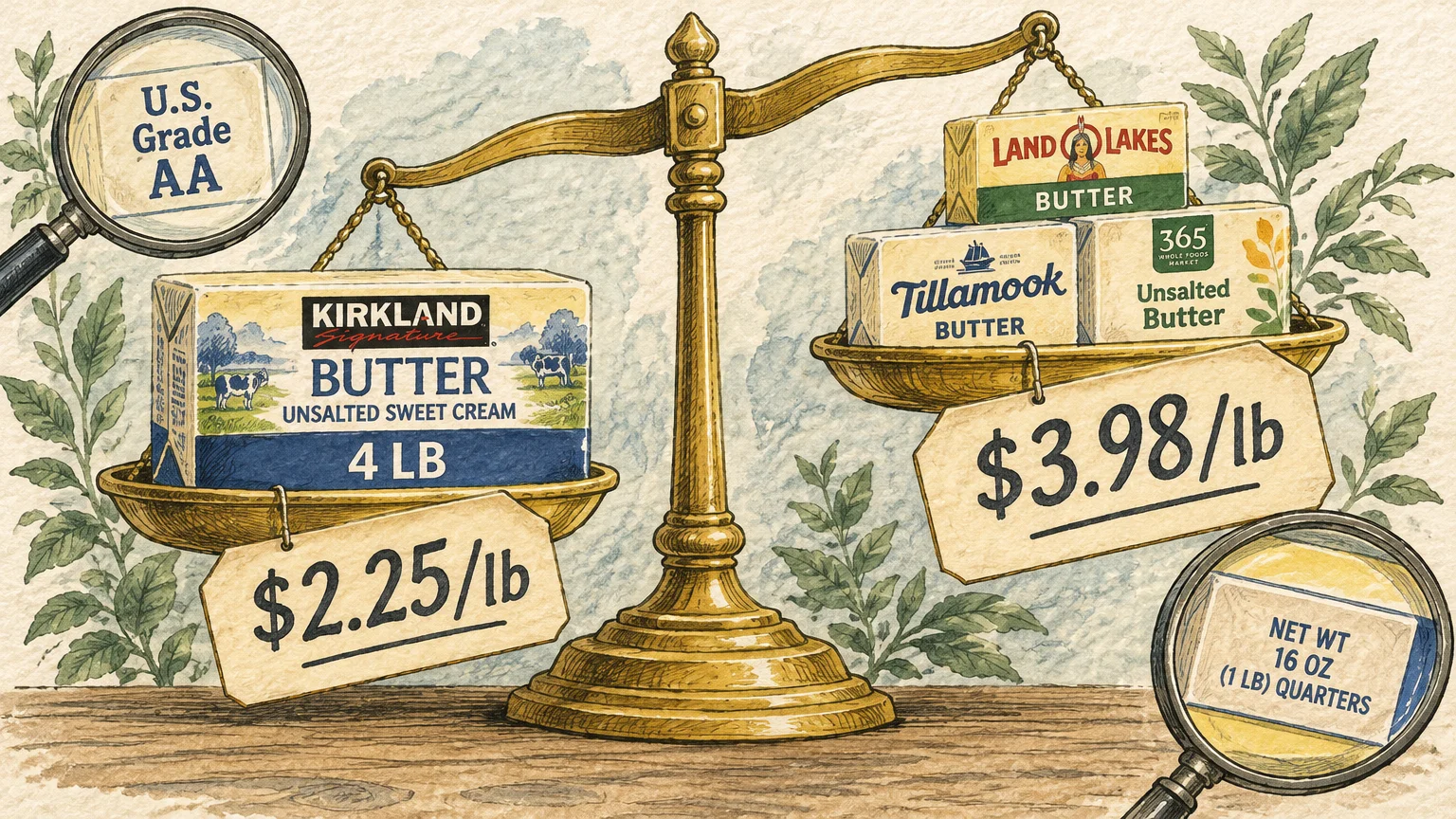
Late-2026 tracking across hundreds of warehouses puts the price between $8.89 and $10.99, averaging $8.99 or roughly $2.25 per pound. That easily beats the October 2026 national retail average of $3.98 per pound reported by the U.S. Bureau of Labor Statistics.
Even against discount chains, the store brand wins on routine math. A September 2026 FinanceBuzz price check found Kirkland Signature butter at $2.12 per pound compared with $3.23 per pound for Walmart Great Value butter.
Buy the unsalted quarters for baking so you control exact sodium levels. Keep salted quarters on hand for toast, skillet vegetables, and quick pan sauces.
2. Kirkland Signature Grass-Fed Butter (Salted)
Shoppers seeking richer pastry results without top-tier import prices should inspect Kirkland grass fed butter. Sold in two-pound packs containing four eight-ounce bars, this salted option typically costs $10.99, or about $5.50 per pound.
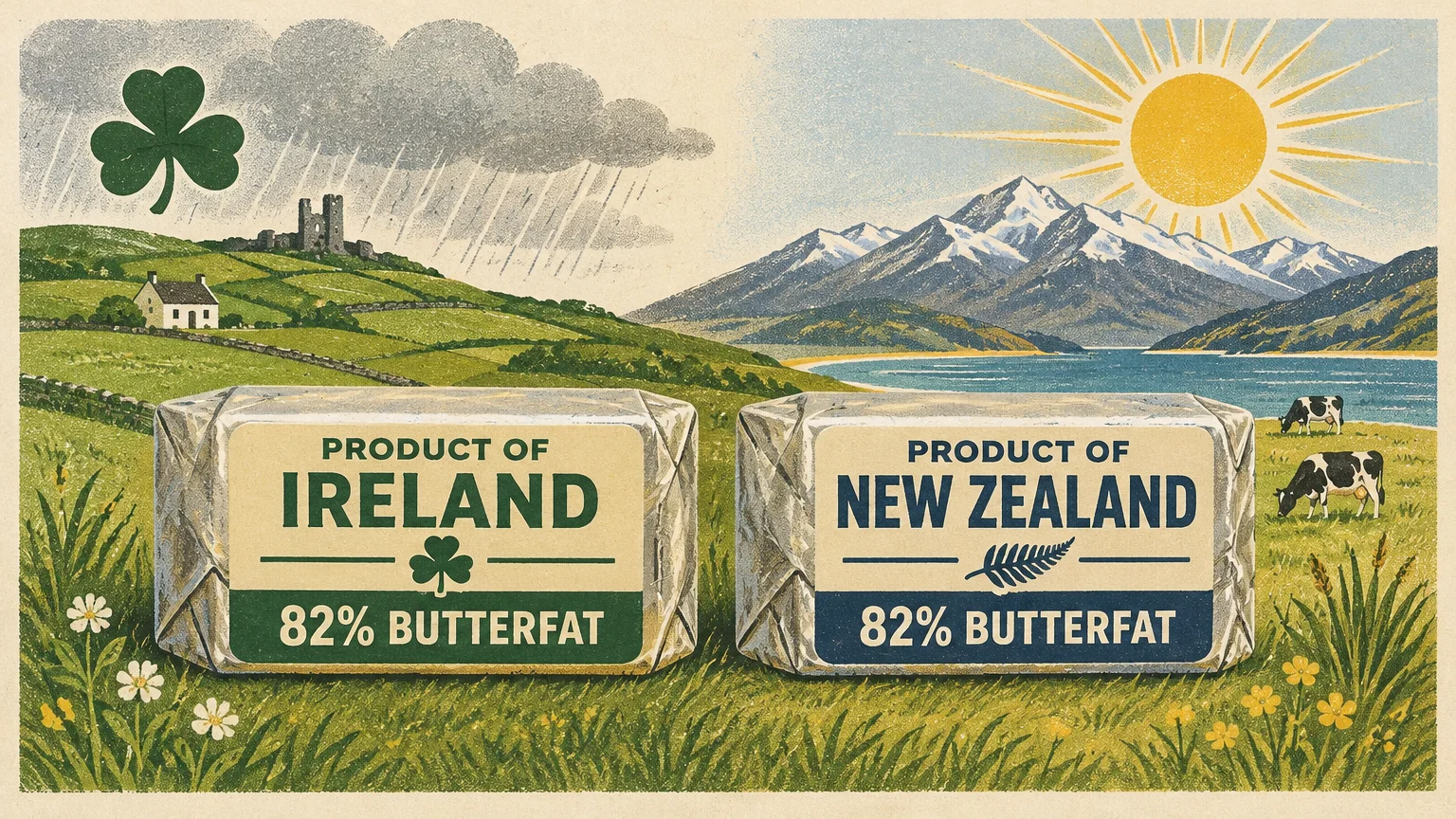
The cream comes from cows eating a 95% grass-fed diet with just 5% grain, yielding 82% butterfat. That extra milkfat and lower moisture create flakier pie crusts and a deeper golden hue than standard American sticks.
A major sourcing shift in 2026 changed how these packages look on warehouse shelves. After launching exclusively with New Zealand supplier Westland Milk Products in 2021, Costco signed a July 2026 deal with Irish dairy co-operative Tirlán.
By late 2026, listings updated to Product of New Zealand or Ireland as clubs stocked flatter, Irish-made blocks at the same $10.99 price. Check the carton before buying if you strongly prefer one origin.
3. Kerrygold Pure Irish Butter (Salted and Unsalted)
Few Costco grocery finds inspire more loyalty than Kerrygold Costco two-pound packs. Made in Ireland from grass-fed cows, Kerrygold delivers 82% to 83% butterfat and a noticeably soft texture straight from the refrigerator.
Pay close attention to the foil color because the two varieties use different recipes. Kerrygold Salted is sweet cream butter with salt, while Kerrygold Unsalted adds skimmed milk and live cultures for subtle tang.
Regular 2025 and 2026 warehouse prices run from $14.59 to $16.99 per two-pound pack. Even at a September 2026 price of $15.49 noted by The Kitchn—roughly $0.48 per ounce—it beats a neighborhood grocer charging $1.94 per ounce.
Timing your purchase around monthly promotions makes this import far easier on your budget. November 2026 markdowns dropped both salted and unsalted packs to $10.89 or $10.99 across hundreds of clubs, matching Kirkland grass-fed pricing.
Wrapper safety has also improved following state packaging bans in California and New York. Kerrygold removed PFAS from its foil wrappers, and Costco confirms current packaging contains no PFAS.
4. Truly Grass Fed Irish Butter (Salted and Unsalted)
Produced by Irish co-operative Tirlán, Truly Grass Fed rolled out across more than 600 warehouses by November 2026. Like Kerrygold, it arrives in a two-pound bundle of four eight-ounce blocks suited for table spreading or European-style baking.
Regular warehouse tags sit between $14.59 and $14.89, keeping it near full-price imports. Wait for instant rebates, though, and this brand often becomes the sharpest grass-fed bargain in the dairy case.
Late-2026 rebates lowered packs to roughly $10.59, while select clubs marked clearance inventory down to $4.97 through $9.97. Watch shelf tags ending in .97 to catch local markdowns before stock disappears.
5. Kirkland Signature Organic Butter Quarters (Salted and Unsalted)
Households prioritizing USDA Organic certification have a straightforward stick option in this two-pound carton. Each package holds two one-pound boxes, giving you eight four-ounce sticks that fit standard measuring-cup recipes.
Warehouse tracking puts the unsalted organic quarters at $12.49, or roughly $6.25 per pound. That makes it pricier than Kirkland grass-fed bars, yet far cheaper per ounce than most single-pound organic boxes at conventional supermarkets.
Honorable Mentions for Specialty Kitchens
Kitchens with specific cooking needs can look just beyond the main butter blocks. Kirkland Signature Organic Ghee comes in a shelf-stable 27-ounce jar, removes lactose, and handles high-heat searing up to a 450°F smoke point.
Kerrygold Soft Tub Irish Butter sells in two-pound multipacks for $14.99 when spreadability matters more than baking sticks. Regional warehouses and Business Centers also rotate Darigold, Grassland, and Keller’s Creamery packs worth comparing during routine restocks.
How to Read Prices, Unit Math, and Package Traps
Sticker prices tell you very little until you calculate the unit price—the total cost divided by weight, such as dollars per pound or cents per ounce. Warehouse clubs mix four-pound boxes, two-pound blocks, and 27-ounce jars side by side.
Without dividing price by ounces, a $10.99 pack looks pricier than a $4.99 supermarket box even when bulk buying costs half as much per meal. Keep your phone calculator open in the dairy aisle.
You also need to watch for size creep and shrinkflation, which happen when brands trim package weight while keeping prices steady or raising them slightly. That quiet reduction raises your per-ounce cost across everyday groceries.
Consider a quick unit-price walkthrough using verified 2026 retail figures. A traditional neighborhood grocer charging $1.94 per ounce for Kerrygold asks $62.08 for two pounds, whereas Costco’s regular $15.49 two-pound bundle costs about $0.48 per ounce.
Waiting for a November 2026 sale at $10.99 drops that rate further to roughly $0.34 per ounce. That single warehouse swap saves more than $51 across just two pounds of the exact same imported butter.
Comparing a private label—a store-owned brand like Kirkland Signature—against a national brand works identically. At $8.99 for four pounds, Kirkland quarters cost $2.25 per pound versus the $3.98 national retail average, saving $6.93 per box.
Cumulative inflation from 2020 through 2025 left groceries roughly 30% higher than in 2019, per BLS CPI data and USDA Economic Research Service reports. Even with 1.8% grocery inflation through September 2026, disciplined unit-price habits protect your budget.
Nutrition, Labels, and Food Safety in Plain English
Marketing claims on the front of a carton—such as pure, pasture-raised, or artisan—rarely tell the whole nutritional story. Always flip the box to scan the Nutrition Facts panel, ingredients list, and federal grading marks.
Under USDA and FDA standards, any product sold legally as butter in the United States must come exclusively from milk or cream and contain at least 80% milkfat. Standard American salted butter holds roughly 80% fat, 17% water, and 1.7% salt.
European-style butters raise milkfat to 82% to 85% while capping water at 16% under European rules. Because U.S. nutrition labels round fat per 14-gram tablespoon to the nearest gram, both 80% and some 82% butters display 11 grams, while Kerrygold lists 12 grams.
Real butter contains zero added sugars—sugars mixed into foods during processing rather than occurring naturally in milk. It also avoids the ultra-processed formulas of many spreads, which combine industrial vegetable oils, water, emulsifiers, and stabilizers.
Watch sodium closely when baking or reducing pan sauces. Unsalted sticks let you season dishes accurately, while salted sticks add sodium you cannot remove later.
Do not confuse quality grades with butterfat percentage when scanning cartons. U.S. Grade AA reflects flavor, body, color, and salt balance rather than extra fat, meaning both 80% sticks and richer European blocks can earn the top grade.
Every commercial U.S. graded butter also undergoes mandatory pasteurization—heating cream to at least 165°F for 30 minutes or 185°F for 15 seconds. Commercial raw butter is illegal to sell, giving budget buyers consistent microbial safety across price tiers.
Bulk Storage and Counter Safety Rules
Buying two to four pounds at once only saves money if you keep the butter safe until the final stick. Both the USDA FoodKeeper app and Michigan State University Extension advise leaving butter at room temperature for no more than one to two days.
Set out only the portion you need in a clean, covered dish. If your kitchen tops 70°F, refrigerate all butter immediately, and note that Land O’Lakes recommends a stricter four-hour counter limit.
Pregnant individuals, young children, and immunocompromised people should avoid room-temperature butter completely. Whipped butter, margarine, and soft spreads must stay refrigerated at all times because added water or air increases bacterial risk.
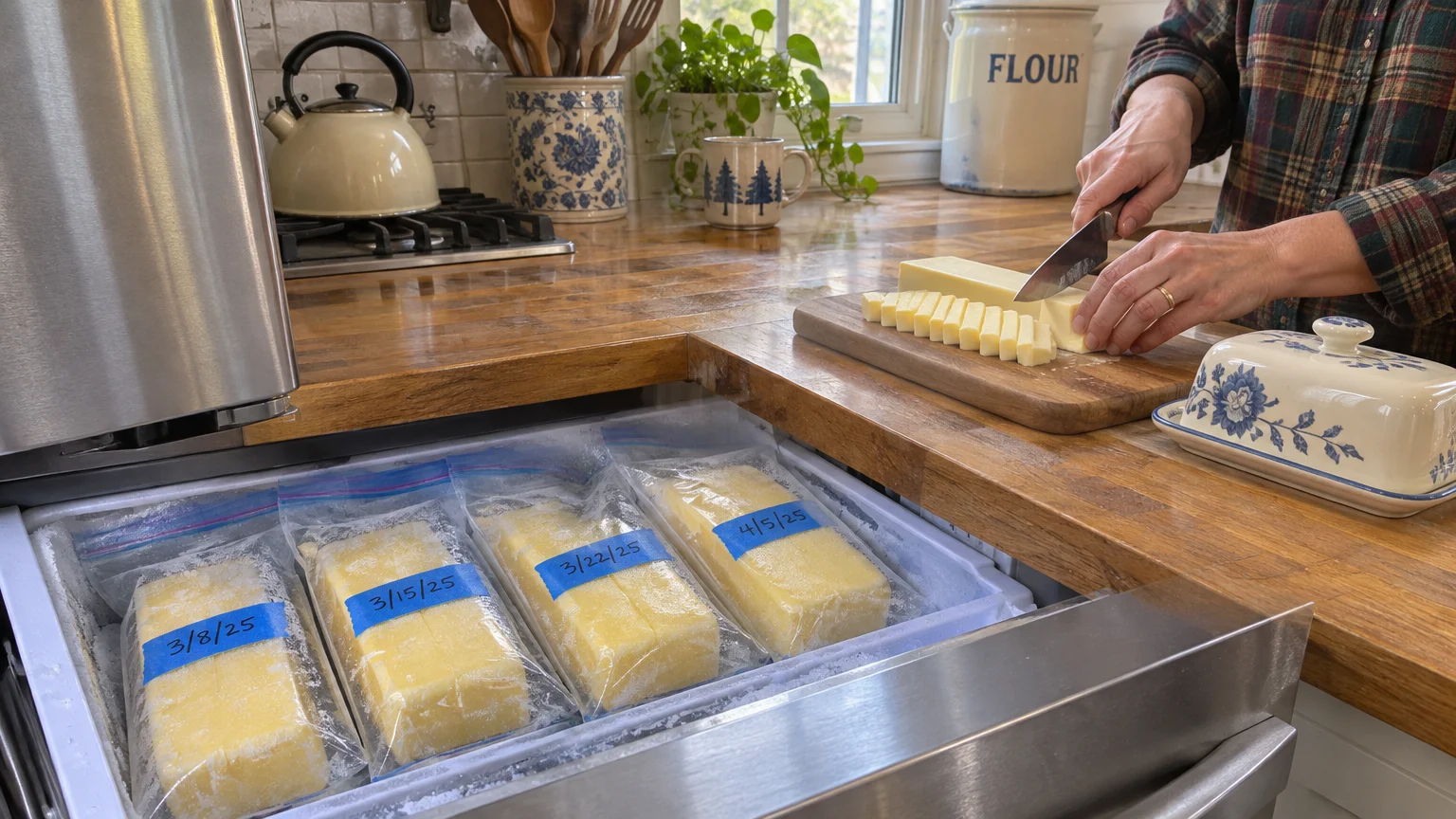
Store unopened warehouse packs in the refrigerator for one to two months from purchase. For longer storage, freeze tightly wrapped sticks or blocks for six to nine months for peak flavor; properly wrapped butter stays safe up to one year frozen.
A Quick Word on Supplements and Quality Seals
While butter supplies fat-soluble nutrients in whole-food form, many shoppers also pick up vitamins in the warehouse pharmacy aisle. Before buying any supplement, check the bottle for USP verification.
That mark confirms independent testing by the U.S. Pharmacopeia for identity, potency, and purity rather than unverified label claims. Always speak with a healthcare clinician before taking supplements, since even common vitamins can interact with prescription medications.
Smart Store Strategy and Membership Math
Many budget rules tell you to shop only the store perimeter—dairy, meat, and produce—while skipping center aisles completely. That rule is useful for spotting fresh dairy, yet too rigid for frugal meal planning.
Perimeter cold cases hold your fresh sticks and grass-fed blocks, while center aisles stock shelf-stable Kirkland Organic Ghee, flour, oats, and dried legumes. Avoiding center aisles entirely pushes you to overpay for pantry basics elsewhere.
Understand how pricing differs between supermarkets and warehouse clubs. Traditional grocers advertise a loss leader—an item sold below cost to attract foot traffic—and issue rain checks when promotional shelves empty.
Warehouse clubs skip rain checks and instead cycle instant rebates across rotating brands. Watching those promotional windows lets you buy Kerrygold or Truly Grass Fed right when prices drop near Kirkland levels.
Digital tools simplify timing before you leave home. Check the warehouse app for monthly instant savings, and pair bulk dairy trips with digital supermarket coupons for smaller perishable items.
Making the Annual Membership Pencil Out
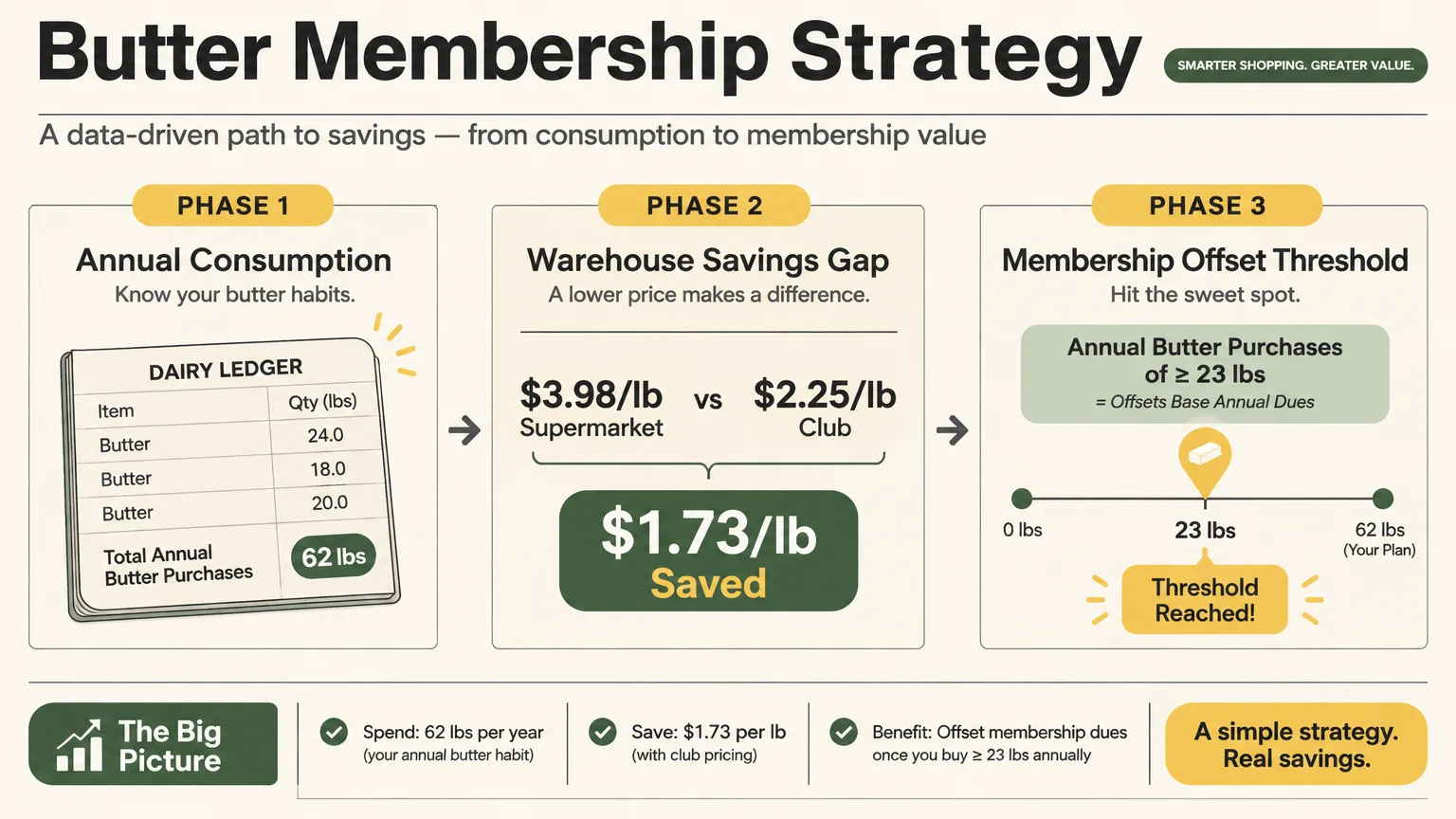
Warehouse dairy savings only help after you account for annual fees. As of late 2026, U.S. Costco Gold Star and Business memberships cost $65 per year and include one free household card.
The Executive tier costs $130 per year, adding early hours, monthly delivery credits on qualifying orders, and a 2% reward capped at $1,250. You need $3,250 in qualifying annual spending—about $271 monthly—to cover that extra $65 fee.
If you spend under $271 per month at the warehouse, stick with the $65 Gold Star plan. Nonmembers ordering eligible items on Costco.com pay a 5% surcharge, so frequent dairy buyers usually cover basic dues quickly.
Simple Pantry Swap Logic
Maintain a two-tier butter stash in your freezer so you never waste costly milkfat on routine tasks. Use Kirkland Sweet Cream Quarters for greasing baking sheets, scrambling eggs, and everyday cookies.
Save 82% butterfat blocks like Kirkland Grass-Fed or Kerrygold for laminated doughs, shortbread, and finishing steaks or roasted vegetables. Swap in shelf-stable ghee whenever pan temperatures climb near 450°F so milk solids never scorch.
Worked Examples: Real Household Math
Example 1: A One-Week, $50 Basket for Two Built Around Bulk Staples
Suppose two adults want to keep one week of groceries near $50 without relying on ultra-processed convenience boxes. Rather than buying single-serving meals, you anchor the week with whole staples and portioned butter pulled from your freezer.
Start breakfasts with one four-ounce stick of Kirkland Sweet Cream Butter—roughly $0.56 at the $2.25-per-pound average—alongside rolled oats, eggs, and seasonal fruit. Adding a small pat of butter turns inexpensive oats into a rich, satisfying morning meal.
For lunches, prep simple grain bowls and grilled sandwiches using brown rice, dried lentils, canned tomatoes, and a touch of salted butter. Stretching affordable plant proteins with whole grains preserves room inside your $50 weekly cap.
Build four dinners from overlapping ingredients: roasted chicken thighs over garlic-buttered potatoes, vegetable stir-fry, lentil soup with buttered toast, and pasta tossed with herbs and olive oil. Bulk butter stretches across every meal for pennies per day.
Example 2: Is It Cheaper to Cook With Store Brand or Name Brand Butter?
Track what happens when a household uses two pounds of butter per month for baking and cooking. At the October 2026 national retail average of $3.98 per pound, two pounds of standard store butter cost $7.96 monthly.
Switching to Kirkland Signature Sweet Cream Quarters at $2.25 per pound cuts that monthly bill to $4.50. Across twelve months, that single swap saves $41.52 while keeping U.S. Grade AA quality.
The gap widens dramatically if your household prefers European-style butter. Buying two pounds of Kerrygold at a neighborhood grocer charging $1.94 per ounce costs $62.08, versus $15.49 at Costco’s regular rate or $10.99 on sale.
Grabbing three sale packs—six pounds total—during a November markdown saves more than $153 compared with the neighborhood grocer. Freezing the extra blocks turns one warehouse trip into months of frugal cooking.
Brand, Retailer, and Supplement Decisions Without Hype
Skeptical shoppers evaluate store brands on ingredients and performance rather than packaging prestige. Private-label suppliers frequently overlap with national brands—Irish co-op Tirlán produces Truly Grass Fed and began supplying Irish-sourced Kirkland Grass-Fed Butter in 2026.
Even so, national brands still win in targeted cases. Kerrygold Unsalted contains live cultures that give shortbread, croissants, and compound herb butters a tangy depth sweet-cream store sticks do not replicate.
Allergens and lactose sensitivity also justify spending selectively. Kirkland Signature Organic Ghee removes milk solids and lactose entirely, letting sensitive cooks enjoy buttery flavor without digestive trouble.
Apply the same evidence-first mindset to supplements sold near the warehouse pharmacy. Prioritize independent third-party testing seals over bold front-label claims, and talk with a clinician before combining supplements with prescription drugs.
Food safety and labeling via the U.S. Food & Drug Administration (FDA) and the U.S. Department of Agriculture (USDA).
Dietary supplements information via the NIH Office of Dietary Supplements (ODS) and third-party standards at the U.S. Pharmacopeia (USP).
Consumer protection and advertising basics via the FTC. General health guidance via the CDC.
FAQs
Are store brands like Kirkland Signature really the same product as name brands?
Sometimes they share a supplier, though exact recipes and packaging formats can differ. Tirlán produces Truly Grass Fed and supplies Irish-sourced Kirkland Grass-Fed Butter, yet salt levels, culturing, and block dimensions still vary by label.
Compare the origin statement, ingredients list, and Nutrition Facts rather than assuming two items match identically. Test one pack in your favorite recipe to verify performance.
Do coupons and instant rebates still matter at warehouse clubs?
Yes, because monthly warehouse rebates frequently shave 25% to 30% off imported butter without paper clipping. November 2026 markdowns lowered Kerrygold from roughly $15.49 to $10.89 or $10.99 across hundreds of clubs.
Truly Grass Fed saw similar late-2026 rebates near $10.59 and clearance tags under $10. Timing bulk dairy buys around those sales lets you enjoy European butter near store-brand prices.
What does USP mean on vitamins and supplements?
The USP Verified mark shows that the U.S. Pharmacopeia independently tested a supplement for ingredient identity, potency, and purity. It confirms that what sits inside the bottle matches the label.
Verification does not mean a supplement suits your medical needs or mixes safely with prescriptions. Ask a doctor or pharmacist before starting any new vitamin or herbal product.
How do I avoid impulse buys when shopping for Costco grocery finds?
Write a strict list organized by dairy case and pantry aisle before entering the warehouse. Limit non-list purchases to one budgeted item so seasonal snacks never erase the savings from bulk butter.
Check unit prices on your phone before placing oversized packages in your cart. Walking past promotional endcaps without pausing protects your monthly grocery target.
Is buying bulk butter worth it for one or two people?
Yes, as long as you have freezer space and wrap unused sticks tightly. Federal food-safety guidance allows storing refrigerated butter for one to two months and frozen butter for six to nine months at peak quality.
Two adults using half a pound weekly finish a four-pound Kirkland box in eight weeks without freezing anything. You capture steep unit-price discounts with zero spoilage.
Disclosure: This article is for informational purposes only and is not medical or nutrition advice. Always read product labels carefully, and consult a healthcare professional regarding supplements, allergies, and medication interactions.
Warehouse prices, item numbers, and product availability vary by store and region. Verify unit prices on the shelf tag before purchasing in bulk.