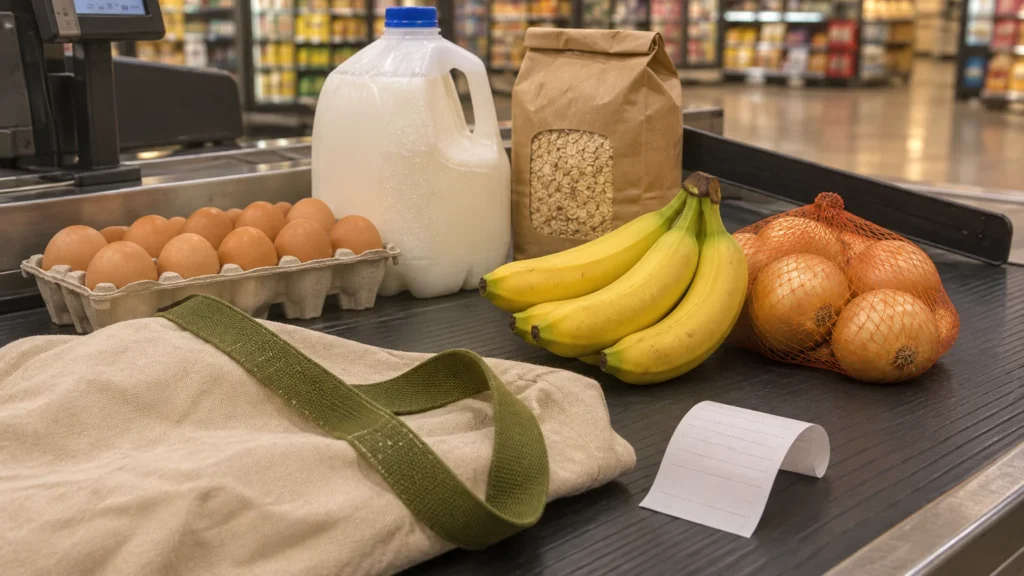
The average Social Security check rises to $2,170 per month in 2027, yet higher Medicare premiums and lingering food inflation quickly trim that raise. You can protect your retiree food budget without sacrificing nutrition or safety.
This guide turns 2027 Social Security buying power into clear supermarket math. You will learn how to compare unit prices, spot shrinkflation, decode nutrition labels, and stretch your dollars across every aisle.
Skip viral coupon hype and rely on repeatable shopping habits instead. First, look closely at what your monthly deposit actually covers before you grab a cart.
What Your 2027 Social Security Check Covers at Checkout
On October 14, 2026, the Social Security Administration (SSA) announced a 3.6% cost-of-living adjustment (COLA) for 2027. That bump follows a 2.8% increase in 2026 and reaches roughly 72 million Social Security beneficiaries starting in January 2027.
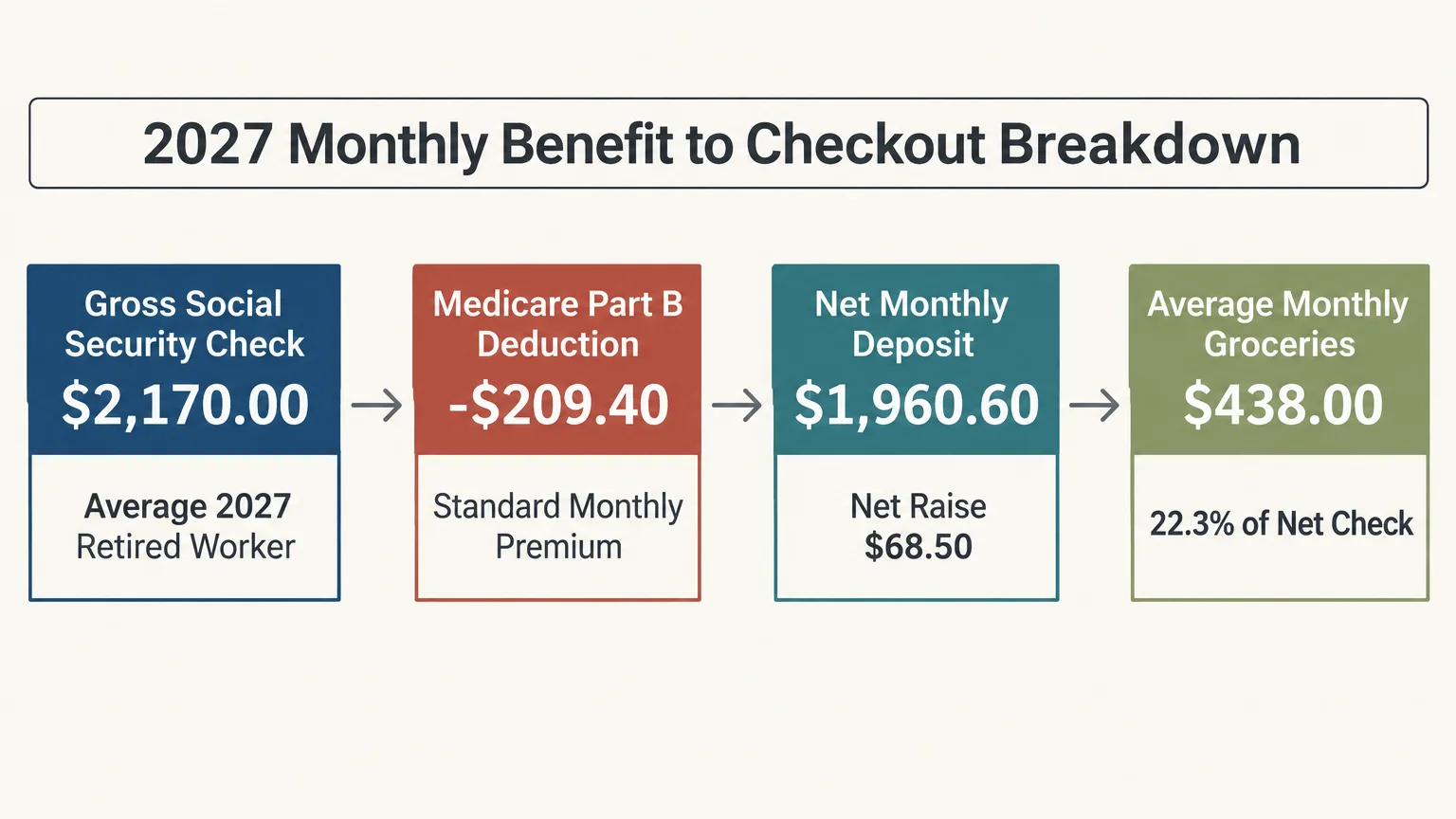
For the average retired worker, monthly benefits rise by about $75, moving from $2,095 to $2,170 per month, or $26,040 per year. An aged couple both receiving benefits sees an average increase of $117, reaching $3,355 per month.
Other households see smaller dollar gains on paper. An aged widow or widower living alone averages $2,005 per month, while disabled workers average $1,701 and individual Supplemental Security Income (SSI) recipients receive a $1,029 federal standard.
Medicare Deductions Trim Your Net Raise
Gross benefit numbers rarely match the cash hitting your checking account. On November 17, 2026, the Centers for Medicare & Medicaid Services (CMS) set the standard 2027 Medicare Part B premium at $209.40 per month.
That $6.50 monthly premium increase comes straight out of most Social Security payments. An average retired worker enrolled in Medicare nets about $68.50 per month from the 2027 COLA rather than the full $75.
Out-of-pocket medical ceilings also edge higher in 2027. The Part B annual deductible climbs to $292, while the Part D prescription drug deductible reaches $700 with a $2,400 annual out-of-pocket cap.
Higher pharmacy bills compete directly with 2027 social security grocery costs. Planning your food spending around net income—after healthcare deductions—prevents mid-month cash crunches.
Why Social Security Buying Power Still Feels Tight
Even with a 3.6% raise, older shoppers feel squeezed at checkout. According to an August 2026 report by The Senior Citizens League (TSCL), Social Security benefits lost 13.7% of their purchasing power between 2016 and 2026.
That erosion leaves checks worth roughly 86 cents on the dollar compared with a decade earlier. TSCL calculates that restoring 2016 buying power would require an extra $295.85 per month for the average beneficiary.
One structural reason involves how annual adjustments get calculated. SSA ties the COLA to the Consumer Price Index for Urban Wage Earners and Clerical Workers (CPI-W), which tracks younger working households rather than retirees.
An experimental price index for older Americans typically runs about 0.2 percentage points higher each year. Between 2010 and 2024, TSCL found that COLAs raised benefits about 58% while typical senior expenses climbed roughly 73%.
That gap hits households with little outside savings hardest. According to 2026 Census Current Population Survey data, 58.3% of beneficiary households age 65 and older rely on Social Security for at least half their income.
Nearly one in three—31.9%—depend on those checks for 90% or more of household income. When benefits carry nearly every bill, grocery discipline becomes essential.
Grocery Prices 2027 vs. Typical Retiree Budgets
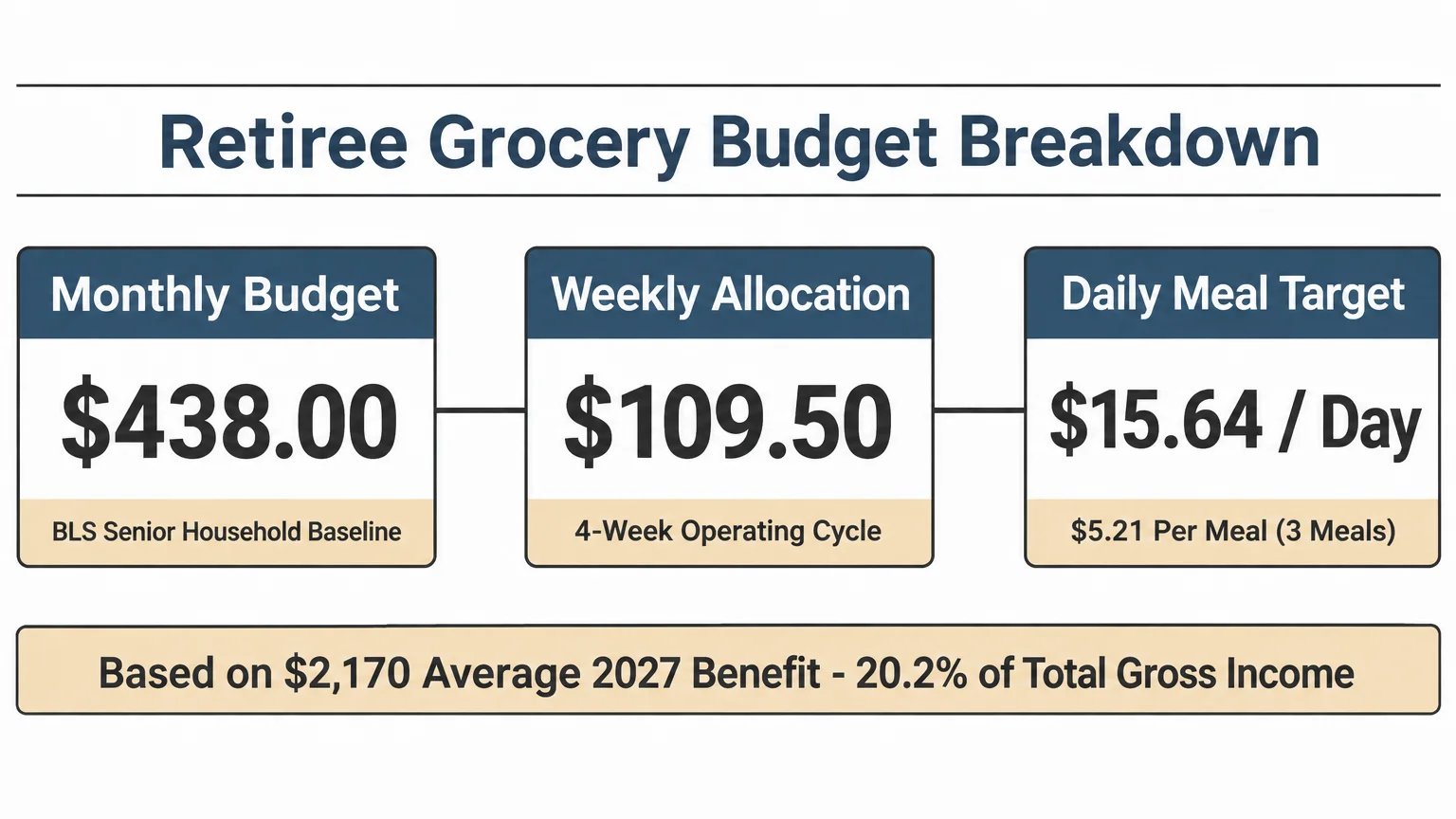
Bureau of Labor Statistics (BLS) Consumer Expenditure Survey data from 2024 shows households headed by someone age 65 or older spent an average of $438 per month on groceries. That represents about one-fifth of an average 2027 retired worker check.
Spending varies by age bracket within retirement. Households age 65 to 74 averaged $470 per month at the grocery store, while those 75 and older averaged $391 per month.
Official USDA Food Plans from October 2026 offer useful monthly guardrails when you cook all meals at home. For a woman age 51 to 70 in a four-person home, monthly plans range from $236.60 on the Thrifty plan to $331.90 on Moderate-Cost.
For a man age 51 to 70, baseline monthly estimates run from $282 on Thrifty to $376 on Moderate-Cost. Because smaller households buy less efficiently, USDA advises adding 20% for a one-person home and 10% for two people.
Price trends remain mixed heading into grocery prices 2027. Per BLS October 2026 data, overall food-at-home prices sat 2.2% above September 2025 levels, while restaurant meals jumped 4.0% over the same span.
In its November 24, 2026 outlook, the USDA Economic Research Service (ERS) projected grocery prices will rise 1.9% in 2027, following a 2.4% rise in 2026. Restaurant prices are forecast to climb 3.6% in 2027.
Specific categories swing sharply based on farm supply. With the U.S. cattle herd at a 75-year low of 28.5 million beef cows, BLS reported 100% ground beef at $6.75 per pound and sirloin steak at $13.85 per pound in October 2026.
Meanwhile, egg flocks recovered and pushed Grade A large eggs down to $2.32 per dozen, well below their March 2025 peak of $6.23. Whole fresh chicken averaged $2.03 per pound, and chicken legs cost just $1.75 per pound.
Staples stayed remarkably steady compared with beef. White rice averaged $1.10 per pound, pasta cost $1.38, white bread sat at $1.86, whole milk averaged $4.10 per gallon, and flour cost just 54 cents per pound.
Check SNAP Rules Before Assuming You Earn Too Much
Many older adults skip food assistance because they assume Social Security disqualifies them. Under fiscal year 2027 USDA Food and Nutrition Service rules, households with someone age 60 or older receive special exemptions.
Older households bypass the standard 130% gross income cap and only need to meet net income limits after deductions. For fiscal year 2027, net monthly limits are $1,330 for one person and $1,804 for two people.
You can deduct out-of-pocket medical expenses above $35 per month, alongside shelter costs and a $217 standard deduction. Maximum monthly benefits reach $306 for one person and $562 for two, with a $23 minimum benefit.
How to Read Prices and Packages
Supermarket price tags confuse shoppers on purpose with bright sale flags and odd package weights. Ignoring the big sticker price and reading two quiet numbers puts you back in control.
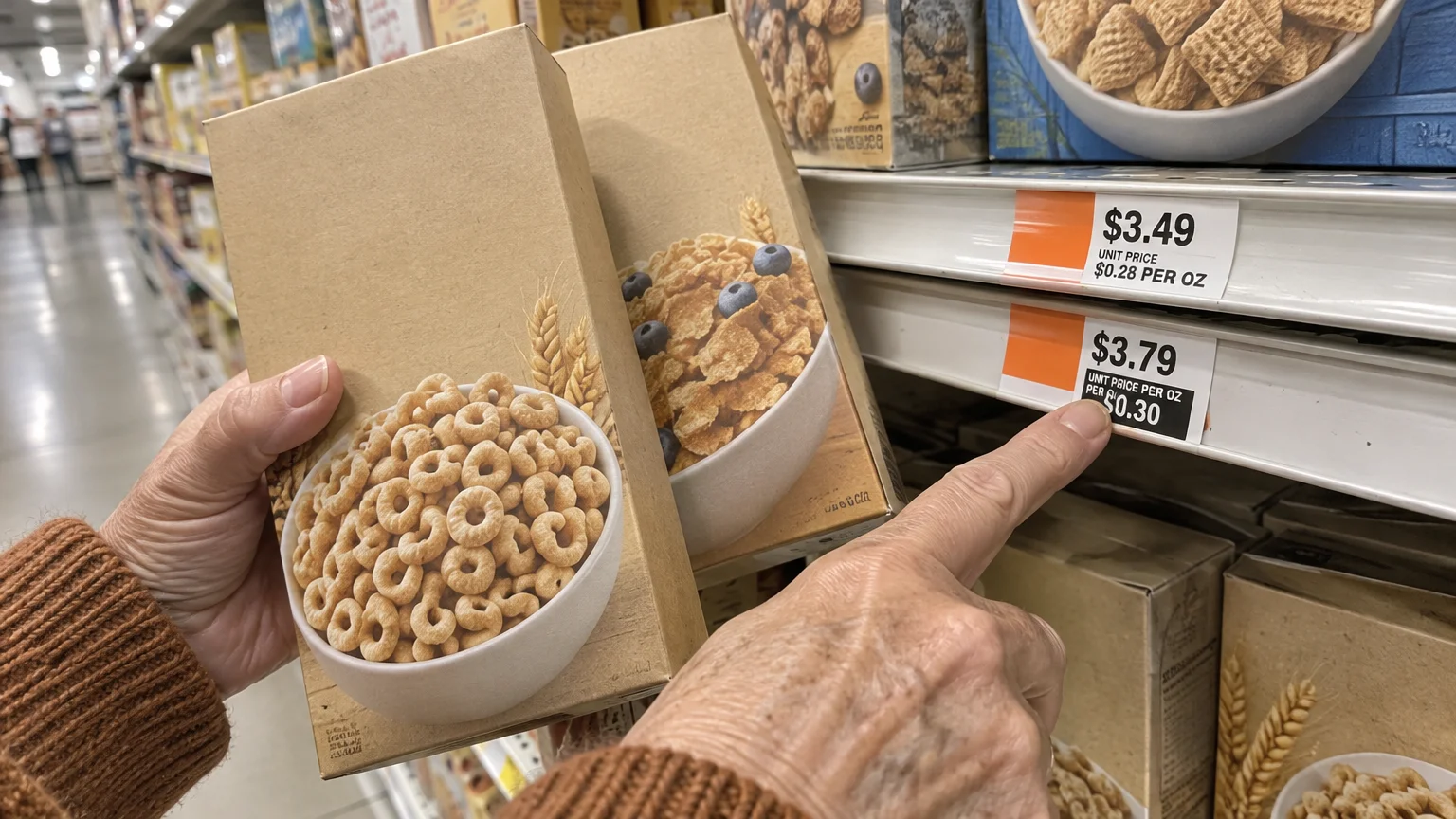
The most useful number on any shelf label is the unit price—the cost per ounce, pound, or count printed in small type near a corner of the tag. Comparing unit prices lets you judge different package sizes fairly.
Manufacturers rarely raise shelf prices without also adjusting package sizes. That practice—often called shrinkflation—keeps the sticker familiar while giving you fewer ounces inside the box or jar.
Consider a quick shrinkflation example using simple grocery math. Imagine a box of crackers that stays priced at $4.00 while shrinking from 16 ounces down to 12 ounces.
At 16 ounces, $4.00 divided by 16 equals 25 cents per ounce. Once the package drops to 12 ounces at that same $4.00 price, the unit cost jumps to roughly 33 cents per ounce.
Your receipt looks identical at $4.00, yet your real food cost jumped by about a third. Checking unit prices catches quiet size cuts before they drain your monthly food budget.
Watch for similar tricks on multi-buy promotions like three-for-$10 displays. In most supermarkets, single items ring up at the same discounted rate unless the tag strictly requires buying all three.
Comparing private-label store brands against national brands follows the same unit-price logic. National brands build television ad campaigns and middleman slotting fees into their per-ounce cost.
Store brands skip most national marketing and pass part of that margin back to you. Always compare the store-brand unit price against a name-brand sale tag—sometimes a sharp loss leader briefly beats the house brand.
Nutrition and Safety, in Plain English
Saving money fails if cheap food undermines your health or lands in the trash spoiled. Reading regulated label sections takes thirty seconds and protects both your wallet and your kitchen.
Front-of-package claims like natural, wholesome, or hearty mostly serve as marketing copy. Real standards apply to the standardized panels regulated at the federal level.
Food safety and labeling via the U.S. Food & Drug Administration (FDA) and the U.S. Department of Agriculture (USDA).
Start every label scan at the top of the Nutrition Facts box by checking the serving size and servings per container. A low-looking calorie or sodium number often covers only half a small can or three crackers.
Next, scan three nutrients that matter closely for cardiovascular and metabolic health: added sugars, sodium, and saturated fat. Added sugars include sweeteners mixed in during processing rather than sugars naturally present in plain milk or whole fruit.
Comparing two jars of pasta sauce or tubs of yogurt side by side often reveals big differences in added sugars and sodium at identical prices. Choosing the lower-sodium, lower-sugar option costs nothing extra.
Finish your scan with the ingredient list, which lists every component in descending order by weight. Shorter lists usually signal simpler processing, though long lists of vitamins in fortified cereal are harmless.
You will often hear nutrition writers warn against ultra-processed foods—industrial formulations built from refined starches, cosmetic flavors, emulsifiers, and stabilizers you do not keep in a home pantry. Think packaged snack cakes, sugary drinks, and neon cheese puffs.
Do not confuse ultra-processed snacks with minimally processed staples. Frozen vegetables, canned beans, rolled oats, and plain yogurt undergo safe preservation steps that lock in nutrition and cut kitchen waste for one- or two-person households.
Older adults also spend significant grocery money on vitamins and minerals in the pharmacy aisle. Because supplements face looser pre-market rules than prescription drugs, look for USP verification—independent testing confirming a bottle actually contains the labeled ingredients without harmful contaminants.
Dietary supplements information via the NIH Office of Dietary Supplements (ODS) and third-party standards at the U.S. Pharmacopeia (USP).
Before buying any supplement promoted heavily on television or social media, verify claims independently. Consumer protection and advertising basics via the FTC. General health guidance via the CDC.
Smart Store Strategy
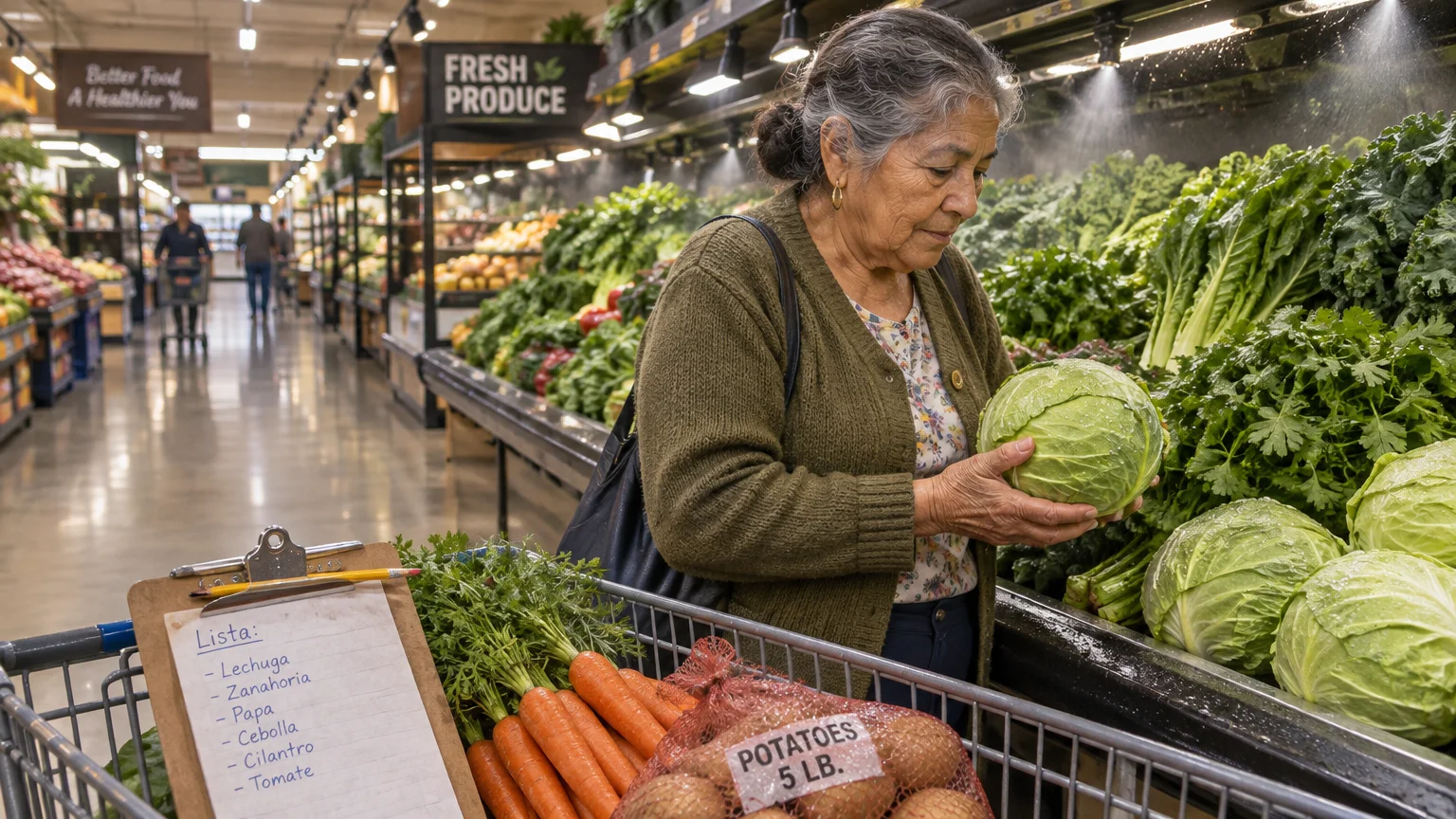
Popular budgeting advice often tells shoppers to stick strictly to the store perimeter and avoid center aisles. That rule sounds tidy, yet following it blindly wastes money and limits cheap nutrition.
Yes, fresh produce, dairy, and meats line the outer walls, alongside pricey bakery trays and prepared deli meals. Meanwhile, center aisles hold dry rice, pasta, flour, oats, canned tomatoes, lentils, and shelf-stable tuna.
A balanced cart blends perimeter specials with affordable center-aisle staples. Skipping center aisles completely forces you into higher-cost fresh convenience items that spoil quickly in small households.
Pay attention to weekly store circulars for loss leaders—high-demand staples priced below store cost to pull shoppers through the doors. Supermarkets discount items like eggs, whole chickens, or butter hoping you will pay full price on snacks.
Buy the loss leader and skip the high-margin impulse displays at the endcaps. If a sale shelf sits empty, ask customer service for a rain check—a written voucher letting you buy that item at the sale price once stock returns.
Check whether digital coupons make sense for your routine before downloading five store apps. Many chains now reserve their lowest meat and dairy prices for free loyalty-card members who clip digital offers before checkout.
If scanning barcodes feels tedious, focus on one main store loyalty program you already visit weekly. Never buy unfamiliar processed foods just to unlock bonus fuel points or digital rebates.
Warehouse clubs also deserve skeptical math on a retiree food budget. Paying an annual membership fee rarely pays back for a solo shopper unless you split bulk packs with family or use the pharmacy and optical desk.
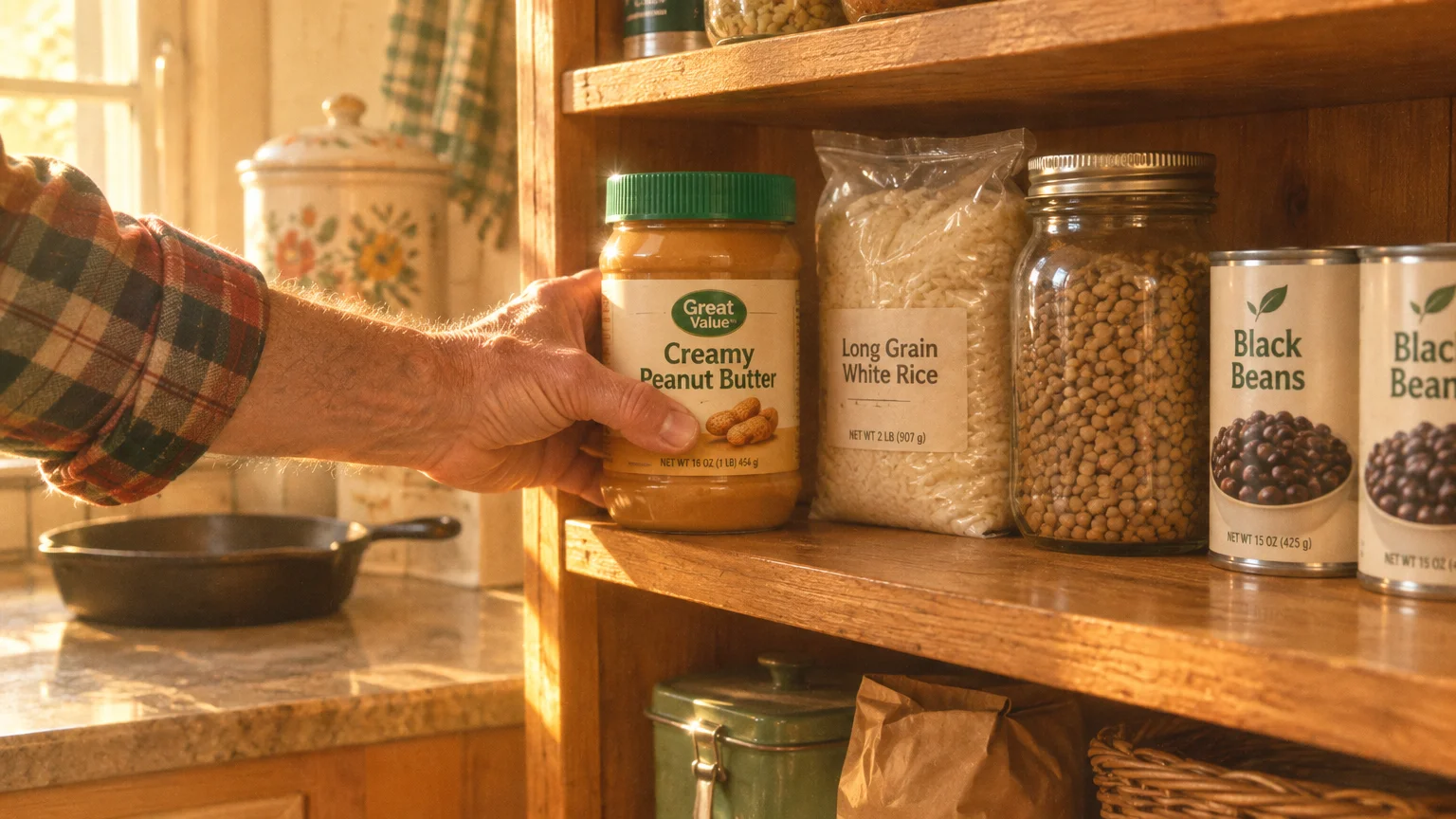
Building a smart pantry relies on simple swap logic rather than rigid recipes. Keep core dry goods—rice at $1.10 per pound, pasta at $1.38, flour at 54 cents, and dry beans—ready to anchor dinner around whatever protein goes on sale.
When ground beef sits at $6.75 per pound, swap it for whole fresh chicken at $2.03 per pound, chicken legs at $1.75, or eggs at $2.32 per dozen. That single protein switch trims several dollars from dinner without shrinking portion sizes.
Pair pantry staples with a 10-minute prep routine right after unloading groceries. Wash and dry sturdy greens, portion family-pack chicken into freezer bags for two, and cook a double batch of rice or beans.
Doing ten minutes of prep while putting groceries away keeps produce from rotting in crisper drawers. Less food waste gives your Social Security check an immediate, invisible raise.
Worked Examples
Abstract advice helps less than real register math. Below are two practical breakdowns built directly from October 2026 BLS average U.S. grocery prices so you can test the numbers yourself.
One-Week, $50 Basket for Two
Can two older adults eat solid, balanced meals at home for $50 per week? Using BLS October 2026 national average retail prices, the core protein, dairy, and pantry staples below total $43.36, leaving $6.64 for seasonal produce.
Start with versatile proteins: buy four pounds of chicken legs at $1.75 per pound ($7.00), one pound of 100% ground beef ($6.75), and two dozen Grade A large eggs at $2.32 per dozen ($4.64). Together, those three picks cover breakfasts, lunches, and four dinners.
Add dairy and fats next: one gallon of whole milk ($4.10), one pound of cheddar cheese ($6.13), and one pound of butter ($3.98). That covers cooking fat, sandwiches, creamy sauces, and morning coffee or tea.
Round out the cart with filling starches and baking basics: two pounds of white rice ($2.20), two pounds of pasta ($2.76), two pounds of white bread ($3.72), two pounds of flour ($1.08), and one pound of sugar ($1.00).
Spend the remaining $6.64 in the produce aisle on dense, low-waste vegetables and fruit—think onions, carrots, cabbage, potatoes, or bananas depending on local specials. You finish right at $50 with leftovers to spare into week two.
Breakfasts alternate between scrambled eggs with buttered toast and quick oatmeal or pancakes mixed from flour, milk, and eggs. Lunches pair grilled cheese sandwiches, egg salad on toast, or reheated dinner portions.
Dinner one features oven-roasted chicken legs seasoned with salt and pepper alongside steamed rice and roasted carrots. Save the leftover chicken bones and scraps in the fridge for soup later in the week.
Dinner two uses half a pound of ground beef browned with diced onions and tossed with pasta and a light butter-cheddar sauce. Freeze or refrigerate the remaining half-pound of beef for a quick lunch hash or next week.
Dinner three turns six eggs, shredded cheddar, and sautéed onions or cabbage into a hearty skillet frittata served with buttered toast. Dinner four simmers leftover chicken meat and bones with carrots, onions, and rice into a warming pot of soup.
Notice what this basket skips: bottled sauces, bagged snacks, sodas, and single-serve frozen trays. Basic staples stretch further, generate less packaging trash, and keep sodium under your control.
Is It Cheaper to Cook This Meal at Home?
Dining out looks tempting for one or two people, especially when energy runs low. Yet BLS data shows restaurant prices climbed 4.0% over the past year, and USDA forecasts another 3.6% jump in 2027.
Price out a four-serving chicken-and-pasta skillet made at home using BLS October 2026 retail averages. Two pounds of chicken legs cost $3.50, one pound of pasta costs $1.38, a quarter-pound of cheddar costs about $1.53, and two tablespoons of butter run roughly 25 cents.
Adding a modest splash of milk, flour to thicken the pan sauce, and pantry seasonings puts total ingredient cost near $7.00 for the whole pan. Divided into four generous servings, dinner costs about $1.75 per plate.
Swapping chicken legs for two pounds of boneless chicken breast at $4.10 per pound raises the pan total by $4.70, still keeping the meal around $2.90 per serving. Store-brand pasta and cheese help keep costs near those national averages, whereas national-brand packaged sauces often double the price per ounce.
Cooking once and refrigerating two extra portions gives you a fast heat-and-eat meal tomorrow night for under two dollars. Even modest casual takeout rarely matches that cost per serving once taxes and tips hit the receipt.
Brand and Retailer Decisions
Frugal shopping works best without blind loyalty to either big national labels or any single supermarket chain. Treat every product category as a quick experiment.
When testing store brands, swap one staple per shopping trip—milk, butter, flour, oats, or canned tomatoes—and notice whether anyone at your table tastes a difference. Keep the cheaper option whenever quality holds steady.
National brands still earn their premium in specific cases. If someone in your home manages severe food allergies, stick with manufacturers whose cross-contact labeling and allergen controls you trust completely.
Name brands can also win on baking performance or texture, such as specific bread flours, specialty cheeses, or coffee beans like the $9.25-per-pound national average tracked by BLS. Paying slightly more for a favorite coffee you finish beats throwing away a bitter bargain tub.
Apply the same careful scrutiny to vitamins, minerals, and herbal supplements stocked near the grocery pharmacy. Always check bottles for third-party verification marks from independent organizations such as USP.
Even verified supplements can interact dangerously with blood thinners, blood pressure pills, or diabetes medications. Review every vitamin or herbal bottle with your physician or pharmacist before adding it to your weekly cart.
FAQs
Are store brands really the same product?
Often they share similar core ingredients and come from large contract manufacturers that also pack national labels, though recipes, seasoning levels, and quality tolerances can differ slightly. Test store brands on basic staples like flour, sugar, milk, and rice first, where differences rarely show up.
Do coupons still matter?
Paper clipping matters far less today than free store digital loyalty coupons and weekly loss-leader circulars. Coupons still save meaningful money when applied to items already on your shopping list, yet chasing rebates on boxed snacks usually raises your total bill.
What does USP mean on vitamins?
The USP Verified mark indicates that the U.S. Pharmacopeia independently tested a supplement batch to verify it contains the declared ingredients in proper strength without unsafe levels of contaminants, and breaks down properly in the body. It confirms manufacturing quality rather than proving a vitamin will cure any disease.
How do I avoid impulse buys?
Shop after eating a meal, carry a written list grouped by store section, and stick to outer aisles plus planned pantry staples. Leaving credit cards at home or bringing a set cash envelope also slows down spontaneous endcap grabs.
What about buying in bulk for one or two people?
Bulk sizing only saves money if you finish everything before it spoils or freezer-burns. Dry rice, oats, pasta, and toilet paper make smart bulk buys for small households, whereas giant tubs of fresh greens or discount condiments often end up wasted.
Can Social Security recipients qualify for SNAP?
Yes, many older adults and disabled beneficiaries qualify, especially when housing or medical costs run high. Households with someone age 60 or older avoid the standard gross income limit and can deduct out-of-pocket medical bills above $35 per month.
Disclosure: This article is for informational purposes only and does not constitute medical, nutrition, legal, or financial advice. Always read product labels carefully and consult a qualified healthcare professional regarding dietary supplements, food allergies, and medication interactions.
Grocery prices, program rules, and product availability vary by store, season, and region. Verify local store pricing and state benefit guidelines before making household budget decisions.